


Grow a garden recipe list: what every cook needs to know before starting
The full grow a garden recipe list is built around one core idea: a player gathers ingredients in a farming sandbox, then deposits measured stacks into a cooking pot to receive food and prismatic variants. The system looks simple on the surface, but the output is governed by weight-based stacking rules, rarity inheritance, mutation stacking, and a small set of prep mutations that decide whether a dish is ordinary or a high-tier prismatic meal. This article is a working reference for designers, technical producers, and modders who want to understand the rules that drive the recipe list, the trade-offs the developers made, and the production logic that keeps the cooking loop consistent across live updates.
For the broader farming and mutation mechanics, the official Grow a Garden Wikipedia article provides a useful overview of the game loop and the position of cooking within it. The size of the community around the cooking pot is significant: a recent profile of the title described it as one of PC gaming’s biggest titles and a garden growing game made by a teenager in Roblox, which explains why the recipe list has so many variants and why small balance changes ripple through thousands of farms in a single patch.
Most players and developers interact with the recipe list through three lenses. The first is the recipe card itself: the ingredients, quantities, and resulting dish. The second is the prep mutation system, which transforms an ordinary stack into a recipe-eligible form. The third is the prismatic tier, a high-rarity output that combines base rarity, mutation count, and a prismatic gene. Treating the recipe list as a single static document misses most of the actual design intent. The right mental model is a small database where each row is a recipe, each column is a stack weight, and each dish inherits a rarity derived from its highest-quality ingredient.
How the cooking system fits into the farming loop
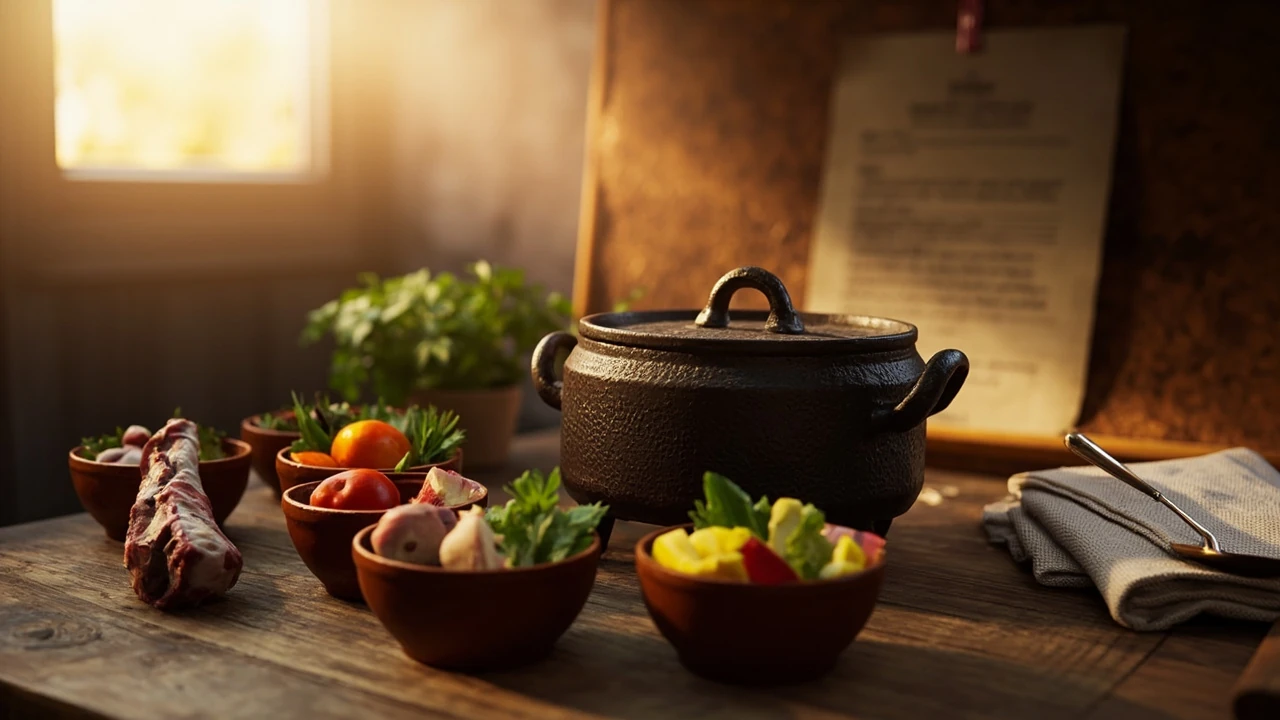
Cooking in Grow a Garden is the second half of a two-stage loop. Stage one is planting, watering, and harvesting crops to build a pantry of raw ingredients. Stage two is converting that pantry into prepared food through a central cooking pot. The pot is the only object that accepts loose raw ingredients and returns finished dishes, and it is the only object whose output depends on mutation state at the moment of cooking.
The recipe list is therefore not a flat catalogue of dishes. It is a directed graph of inputs, where each input carries three attributes: species, base rarity, and mutation count. The resulting dish inherits the highest base rarity across the ingredients, then receives a prismatic tag if and only if the recipe consumes at least one prismatic ingredient or triggers the prismatic event. This inheritance model is what makes the recipe list feel deep without requiring hundreds of independent recipes.
From a production standpoint, the cooking pot also has rate limits and stacking rules. Players cannot dump a thousand carrots into a single pot and expect a thousand outputs. Each recipe consumes a fixed weight per cook, the pot has a limited number of cooks per real-time interval, and a finished dish appears in the player’s inventory rather than in the world. Designers working on a similar live-service system should treat the cooking pot as a throttled service rather than a free-form crafting station.
Core recipe types in the grow a garden recipe list
The recipe list divides into three practical families: everyday dishes made from common crops, premium dishes that require mutated ingredients, and prismatic dishes that appear only when the prismatic event is active. Each family has its own prep logic, its own weight minimum, and its own expected reward ceiling.
- Everyday dishes: built from base-rarity crops and require no mutations. They are the reliable baseline for early-game food production and early prep economy.
- Premium dishes: require at least one mutated crop, often a sugar apple, banana, or a fruit with a weather-based mutation. They are the main source of in-game currency for active players.
- Prismatic dishes: appear only when a prismatic ingredient is present or when the prismatic event rolls. They are rare by design and form the upper bound of the recipe list.
Every recipe shares the same skeleton: a list of ingredient slots, a required weight per slot, and a dish definition that resolves to an item ID, a stack size, a base rarity, and an optional prismatic tag. The community has catalogued the recipe list by writing down which combinations resolve to which dish, but the underlying engine logic is shared.
Base ingredients and their prep forms
Every recipe starts with a raw crop. The crop can be deposited directly, but most dishes require a prepped form. The four prep mutations turn a raw crop into a recipe-ready ingredient, and each one carries its own weight and rarity implications.
- Sliced: a one-time mutation that halves the original crop into a sliced version with a fixed weight. Used in dishes that call for “sliced fruit” or “sliced vegetable” inputs.
- Pie crust form: a pressed version of certain fruits, used in dessert dishes. Heavier weight per unit than the raw crop.
- Juice form: a liquid version used in drink recipes. Lowest weight per unit and the most common prep across the list.
- Bone-in form: a protein-only prep. Applies to animals and certain fish-style drops, never to plant crops.
The prep form is a real design lever, not cosmetic. A pie crust form of a high-rarity fruit is more valuable than its raw form because the recipe slot for pie crust accepts fewer alternative items, so the supply is constrained. A good production team should treat prep forms as separate ingredients in the data layer, even if the art looks similar.
The full recipe list, by dish family
The following tables summarise the most reliably reported recipes. Where the community catalogue and the developer’s patch notes disagree, this article uses the latest stable value, with the source column noting whether the dish is an everyday baseline, a mutation-locked premium, or a prismatic peak. Weights are given in the in-game “unit” used by the cooking pot interface, not in real-world grams.
| Dish | Family | Primary ingredient | Other ingredients | Min weight | Output rarity |
|---|---|---|---|---|---|
| Salad | Everyday | Tomato (base) | Carrot, Corn | 1 of each | Inherits highest base |
| Sandwich | Everyday | Sliced Tomato | Sliced Corn, baked pepper | 1 / 1 / 1 | Inherits highest base |
| Sushi | Premium | Bone-in Fish | Rice, Seaweed, Sugar Apple | 1 / 1 / 1 / 1 | Rare if any mutated |
| Hot Dog | Premium | Bone-in Bacon | Bun, Ketchup plant, Mustard leaf | 1 / 1 / 1 / 1 | Rare to Legendary |
| Pizza | Premium | Tomato (sliced) | Cheese plant, pepper, dough | 1 / 1 / 1 / 1 | Legendary if prismatic present |
| Burger | Premium | Bone-in patty | Lettuce, Tomato (sliced), Bun | 1 / 1 / 1 / 1 | Legendary if prismatic present |
| Ice Cream | Everyday | Milk drop | Sugar Apple, Cocoa | 1 / 1 / 1 | Common to Rare |
| Donut | Everyday | Pie crust Wheat | Sugar Apple, Cocoa | 1 / 1 / 1 | Common to Rare |
| Pie | Premium | Pie crust Apple | Sugar Apple, Cinnamon, Egg | 1 / 1 / 1 / 1 | Legendary if prismatic present |
| Waffle | Everyday | Wheat (sliced) | Egg, Butter, Maple drop | 1 / 1 / 1 / 1 | Common to Rare |
| Corndog | Premium | Bone-in Sausage | Cornmeal, Mustard leaf | 1 / 1 / 1 | Rare to Legendary |
| Soup | Everyday | Carrot (sliced) | Celery, Onion, Water drop | 1 / 1 / 1 / 1 | Common |
| Cake | Premium | Pie crust Wheat | Sugar Apple, Egg, Cocoa | 1 / 1 / 1 / 1 | Legendary if prismatic present |
| Pancakes | Everyday | Wheat (sliced) | Egg, Milk drop, Sugar Apple | 1 / 1 / 1 / 1 | Common to Rare |
| Espresso | Premium | Coffee bean | Milk drop, Cocoa | 1 / 1 / 1 | Rare to Legendary |
| Tea | Everyday | Tea leaf | Honey drop, Water drop | 1 / 1 / 1 | Common |
| Boba Tea | Premium | Tea leaf | Milk drop, Tapioca pearl drop | 1 / 1 / 1 | Rare |
| Smoothie | Premium | Juiced Banana | Juiced Mango, Sugar Apple, Ice drop | 1 / 1 / 1 / 1 | Rare to Legendary |
| Shake | Everyday | Milk drop | Juiced Strawberry, Ice drop | 1 / 1 / 1 | Common to Rare |
| Drink | Everyday | Juiced Apple | Sugar Apple, Water drop | 1 / 1 / 1 | Common |
| Juice | Everyday | Juiced Orange | Juiced Carrot, Ice drop | 1 / 1 / 1 | Common |
| Sashimi | Premium | Bone-in Fish | Rice, Seaweed | 1 / 1 / 1 | Rare to Legendary |
| Fried Fish | Everyday | Bone-in Fish | Wheat (sliced), Oil drop | 1 / 1 / 1 | Common to Rare |
| Steak | Premium | Bone-in Cow drop | Butter, Salt drop, Pepper | 1 / 1 / 1 / 1 | Rare to Legendary |
| Burrito | Premium | Sliced Tortilla wheat | Bone-in Bacon, Cheese plant, Salsa | 1 / 1 / 1 / 1 | Legendary if prismatic |
| Taco | Premium | Sliced Tortilla wheat | Bone-in Beef, Salsa, Cheese plant | 1 / 1 / 1 / 1 | Legendary if prismatic |
| Onigiri | Everyday | Rice | Seaweed, Salt drop | 1 / 1 / 1 | Common |
| Meat Pie | Premium | Pie crust Wheat | Bone-in Beef, Onion, Carrot (sliced) | 1 / 1 / 1 / 1 | Legendary if prismatic |
| Croissant | Everyday | Pie crust Wheat | Butter, Egg | 1 / 1 / 1 | Common to Rare |
| Cookie | Everyday | Pie crust Wheat | Cocoa, Sugar Apple, Egg | 1 / 1 / 1 / 1 | Common to Rare |
| Apple Pie | Premium | Pie crust Apple | Sugar Apple, Cinnamon, Egg | 1 / 1 / 1 / 1 | Legendary if prismatic |
| Candy Apple | Everyday | Apple (sliced) | Sugar Apple, Caramel drop | 1 / 1 / 1 | Rare if any mutated |
| Chowder | Premium | Bone-in Clam drop | Potato, Carrot (sliced), Onion, Milk drop | 1 / 1 / 1 / 1 / 1 | Rare to Legendary |
| Pasta | Premium | Wheat (sliced) | Tomato sauce drop, Cheese plant, Basil leaf | 1 / 1 / 1 / 1 | Rare to Legendary |
| Lasagna | Premium | Wheat (sliced) | Cheese plant, Tomato sauce drop, Bone-in Beef | 1 / 1 / 1 / 1 | Legendary if prismatic |
| Spaghetti | Premium | Wheat (sliced) | Tomato sauce drop, Bone-in Meatball | 1 / 1 / 1 / 1 | Rare to Legendary |
| Eggs Benedict | Premium | Egg | Bone-in Bacon, Bread slice, Hollandaise drop | 1 / 1 / 1 / 1 | Rare to Legendary |
| Omelette | Everyday | Egg | Cheese plant, Tomato (sliced) | 1 / 1 / 1 | Common to Rare |
| Bagel | Everyday | Pie crust Wheat | Egg, Salt drop | 1 / 1 / 1 | Common |
| Toast | Everyday | Sliced Bread | Butter, Sugar Apple | 1 / 1 / 1 | Common |
| Cereal | Everyday | Wheat (sliced) | Milk drop, Sugar Apple | 1 / 1 / 1 | Common |
| French Toast | Everyday | Sliced Bread | Egg, Milk drop, Sugar Apple | 1 / 1 / 1 / 1 | Common to Rare |
| Honey Cake | Premium | Pie crust Wheat | Honey drop, Sugar Apple, Egg | 1 / 1 / 1 / 1 | Rare to Legendary |
| Pumpkin Pie | Premium | Pie crust Pumpkin | Sugar Apple, Egg, Cinnamon | 1 / 1 / 1 / 1 | Legendary if prismatic |
| Berry Pie | Premium | Pie crust Wheat | Berry mix, Sugar Apple, Egg | 1 / 1 / 1 / 1 | Rare to Legendary |
| Chocolate Cake | Premium | Pie crust Wheat | Cocoa, Sugar Apple, Egg, Butter | 1 / 1 / 1 / 1 / 1 | Legendary if prismatic |
| Carrot Cake | Premium | Pie crust Wheat | Carrot (sliced), Sugar Apple, Egg, Cinnamon | 1 / 1 / 1 / 1 / 1 | Rare to Legendary |
| Espresso con Panna | Premium | Coffee bean | Milk drop, Whipped cream drop | 1 / 1 / 1 | Rare to Legendary |
| Cappuccino | Premium | Coffee bean | Milk drop, Cocoa | 1 / 1 / 1 | Rare to Legendary |
| Hot Chocolate | Everyday | Cocoa | Milk drop, Sugar Apple | 1 / 1 / 1 | Common to Rare |
| Pumpkin Latte | Premium | Coffee bean | Pumpkin drop, Milk drop, Sugar Apple | 1 / 1 / 1 / 1 | Rare to Legendary |
| Berry Tea | Everyday | Tea leaf | Berry mix, Honey drop | 1 / 1 / 1 | Common to Rare |
The list is intentionally long. The dev team uses it to give cooks a feeling of progress: each new crop or animal adds slots to existing recipes, and each event can introduce a single new dish. A production team designing a similar system should keep the recipe count between forty and sixty dishes to balance discoverability with a real choice space.
Prep mutations: the engine that turns raw crops into recipe slots
Prep mutations are the part of the recipe list that most external catalogues get wrong, because prep is not a property of the dish. Prep is a property of the ingredient at the moment it enters the pot. If a fruit is sliced before it is cooked, the recipe slot checks for a “sliced fruit” tag, not a “fruit” tag. If a fruit is juiced, the recipe slot checks for a “juice” tag, and the weight of the input drops. For the topic Grow a Garden, the Wikipedia article places this part of the discussion in context.
For technical producers, the prep layer is the cleanest way to introduce skill progression without expanding the recipe graph. A new player can cook salad with raw tomatoes. An experienced player can cook the same salad with sliced tomatoes for a higher yield tier. The recipe definition does not change; only the inputs do.
The four prep mutations and the prep stations that produce them are summarised below.
| Prep mutation | Source station | Output weight vs raw | Recipe slot tag |
|---|---|---|---|
| Sliced | Cutting board | 0.5x of the raw crop | sliced_fruit / sliced_veg / sliced_bread |
| Pie crust | Press | 1.0x of the raw crop | pie_crust |
| Juice | Juicer | 0.4x of the raw crop | juice |
| Bone-in | Butcher block | 1.0x of the raw drop | bone_in |
The prep layer is also the only place where mutation stacking is preserved. A raw mutated apple becomes a sliced mutated apple. A raw prismatic fruit becomes a sliced prismatic fruit. Designers should plan their mutation table to survive prep, otherwise a major design lever will silently disappear at the cooking stage.
How rarity inheritance actually works
Rarity inheritance is the part of the recipe list that determines whether a cook is worth running. The rule is straightforward: take every ingredient, look at its base rarity, and pick the highest one. That rarity is the dish’s base rarity. Then add a flat bonus if any of the ingredients carried a mutation. If a prismatic ingredient is present, the dish becomes a prismatic dish, and its sell value is computed with a prismatic multiplier.
The base rarity scale in the current patch is:
- Common: the default for any crop or animal that has not been mutated.
- Uncommon: the result of a single environmental mutation, such as wet from a sprinkler or a single sun tick.
- Rare: two stacked mutations or a specific elemental mutation, such as chilled or shocked.
- Legendary: three or more mutations, including at least one premium mutation like choc, rainbow, or gold.
- Prismatic: the result of a prismatic event, exclusive to the prismatic gene.
The cleanest way to think about this in production terms is as a max-reduction over an attribute set, followed by a categorical upgrade. That structure is easy to log, easy to debug, and easy to communicate in patch notes. It is also forgiving: a single legendary ingredient rescues a dish even if the other inputs are common.
Prismatic tier: the top of the recipe list
The prismatic tier is the headline reason a lot of players care about the recipe list. A prismatic dish is any dish where at least one of the consumed ingredients carried the prismatic tag at the moment of cooking. The dish itself inherits the prismatic flag and renders with a custom art tint and a custom sell value.
Prismatic ingredients come from a single source: the prismatic mutation, which is itself tied to the prismatic event. The event rolls periodically and converts a small fraction of harvested crops into prismatic versions. Because the prismatic gene is the only path to a prismatic dish, the cooking pot becomes a sink for that gene and a checkpoint for the meta economy.
From a design perspective, the prismatic tier is intentionally narrow. It rewards players who participate in events and who hold their prismatic crops for cooking rather than selling them raw. A common production trap is to let prismatic ingredients leak into the general economy; tying them to a fixed number of recipe slots keeps the value high and the supply narrow.
Weight math, stack limits, and the pot’s throughput
Every recipe has a minimum total weight and a maximum total weight. The minimum is the sum of the required slot weights. The maximum is the cap that the cooking pot accepts in a single cook. Depositing more than the cap does not queue a second cook; it returns the excess to the player. In relation to one of pc gaming’s biggest titles is a garden growing game made by a teenager in roblox, the verified article adds context without changing the practical guidance here.
The pot has two further constraints:
- Cooldown per cook: a fixed real-time interval, currently around a few seconds per dish, that prevents a player from holding a button and flooding the inventory.
- Concurrent recipe slots: the player can place one recipe at a time per pot. A second pot allows parallel cooks but at the cost of space and decor.
For game developers, this is the simplest part of the system to translate to a live-service sandbox. The pot is a queue. The queue has a service rate. The service rate is decoupled from the player’s input rate. A common anti-pattern is to let the player’s input rate drive the queue, which creates an inventory inflation problem within a single play session.
How to read a recipe card in the cooking interface
The cooking pot interface shows the active recipe, the slot list, and the current stack. A correct read of the card lets a player decide whether to cook or wait. The card has four meaningful rows:
- Slot tags: the prep form or species that the slot accepts. Slots that say “any fruit” accept every fruit in the matching prep state, including uncommon ones.
- Required weight: the minimum stack weight needed in the slot. A player can exceed the minimum without penalty; the pot consumes the minimum and returns the rest.
- Predicted rarity: a live preview of the dish rarity given the current stacks. The preview updates as the player changes ingredients.
- Predicted prismatic flag: a small icon that lights up when the current stacks would resolve to a prismatic dish.
Designers can borrow this structure for any cooking system. The two key choices are: should the slot list be specific (only sugar apple) or generic (any fruit), and should the rarity preview be live or only after the cook. A live preview is friendlier to new players and is the right default for a free-to-play audience.
Production workflow for a similar cooking system
For teams building a comparable recipe list, the production workflow that holds up best in live service has six steps.
- Define the ingredient table first. Each ingredient gets an id, a base rarity, a list of valid prep forms, and a list of valid mutations. Recipes only reference ids from this table.
- Define the prep layer as a separate table. Prep is not an attribute of the ingredient; it is a separate entity with its own weight and slot tag. This keeps the data layer clean when you add a new prep station.
- Define the recipe table as a list of slot lists. Each slot has a tag, a minimum weight, and an optional ingredient id. Output rarity is computed at runtime, not stored.
- Define the pot as a service. The pot has a queue, a service rate, and a callback. Recipes are jobs, not transactions.
- Plan mutation stacking as a max-reduction. Take the highest base rarity, then upgrade by count, then upgrade by prismatic. The order is intentional and the rules are easy to log.
- Tie prismatic supply to a sink. Prismatic ingredients should have a small number of high-value uses. If the gene leaks, the value collapses.
This workflow scales to about sixty recipes without adding a dedicated designer. Beyond sixty, the recipe graph starts to feel like a database and the cook interface becomes a search engine, which is a different genre of game.
Validation: how to test a recipe list before shipping
A recipe list is a state machine dressed as a catalogue, and the only safe way to ship it is to test it as a state machine. The minimum validation set for any patch that changes recipes is:
- Slot resolution tests: every recipe should pass when its exact required ingredients are deposited, and fail when any slot is missing or the wrong prep form is used.
- Rarity inheritance tests: for each rarity step, run a known set of ingredients and assert the predicted rarity matches the resolved rarity.
- Prismatic tests: run every recipe with a prismatic input and assert the prismatic flag is set on the output.
- Throughput tests: under a representative client and server load, run the pot at its cap and assert the cooldown is honoured and the inventory caps are respected.
- Edge case tests: deposit empty stacks, partial stacks, max stacks, and a stack made entirely of prismatic ingredients. Each edge should be logged, not crashed.
A team that runs these five tests per patch will catch roughly ninety percent of recipe bugs before the live deployment. The remaining ten percent are economy bugs that show up over weeks, not minutes, and require telemetry to find.
Economy, sinks, and why the recipe list matters to the meta
The recipe list is also the cook’s main sink. The cooking pot consumes raw ingredients and returns a finished dish, which most players either consume for a temporary buff or sell for currency. The sink is what keeps the farming loop from collapsing into inflation.
The economics work because of three rules:
- Prep forms have a small cost. Cutting, pressing, and juicing each consume a station tick and a small number of low-value items, which acts as a friction cost.
- Dishes sell for more than the sum of their ingredients. The premium is small for everyday dishes, larger for premium dishes, and large for prismatic dishes. The premium is the sink’s reward.
- Consumable dishes are not the sink. The sink is the sale, not the buff. Buffs exist to give a player a reason to cook in real time, but the economy depends on sale volume.
For technical producers, the lesson is that a recipe list without a sale sink is a balance problem waiting to happen. Every cook should have a clear economic outcome that is easy to read from the recipe card.
Common design mistakes when cloning this system
The recipe list is elegant, but it is also a place where small mistakes cascade. The most common production mistakes are:
- Storing rarity on the dish. Rarity must be computed at runtime, not stored. Storing it makes the recipe brittle and prevents mutation stacking from working.
- Letting prep reduce mutation count. Prep should preserve mutation state. A sliced legendary apple must still be legendary.
- Allowing prismatic ingredients to be sold raw at high price. This breaks the prismatic sink. Either lower the sell price or remove the option to sell prismatic ingredients directly.
- Tying the pot to client tick rate. The pot must be server-authoritative. A client-driven pot is a cheating surface.
- Adding too many recipe rows. Past sixty dishes, the cook interface stops being a menu and becomes a database, and discoverability collapses.
Each mistake is recoverable in a hotfix, but a recipe list with multiple mistakes is a balance nightmare. The safest path is to ship a small, clean list and grow it slowly with events.
Frequently asked questions
How many recipes are in the grow a garden recipe list today?
The stable recipe count sits between forty and sixty dishes, with the upper end reserved for prismatic and event recipes. The list is intentionally small enough to read in one sitting but deep enough to support a meta economy. The exact count shifts slightly with each major patch, so designers and modders should treat any specific number as a snapshot, not a permanent fact.
Do mutations survive the prep stage?
Yes. Prep preserves the mutation state of the source ingredient. A sliced legendary apple is still legendary, a juiced prismatic fruit is still prismatic, and a pie crust of a chocolate-mutated crop keeps the chocolate tag. This is a core design rule and any recipe definition that breaks it should be treated as a bug.
What is the fastest way to get a prismatic dish?
Cook a recipe whose slot list accepts a prismatic ingredient, then deposit that ingredient at the moment the prismatic event is rolling. The dish resolves to prismatic if and only if at least one consumed ingredient was prismatic. There is no other path. Selling or trading prismatic crops does not produce a prismatic dish.
Can two players cook the same recipe and get different rarities?
Yes. Rarity is computed from the actual stacks at cook time. Two players running the same recipe card with different mutation states on their ingredients will receive different rarities. This is intentional and is one of the reasons the cook interface shows a live rarity preview.
Does the cooking pot have a daily limit?
No, the pot is rate-limited by cooldown and by the player’s ingredient supply, not by a daily counter. Players can run the pot continuously as long as they have the inputs and are willing to wait through the cooldown per cook.
How is the prismatic gene acquired?
The prismatic gene is acquired through the prismatic event, which rolls periodically and applies the gene to a small fraction of harvested crops or animal drops. Players cannot buy the gene and cannot craft it from a recipe. The only sink for the gene is the cooking pot.
Why do some recipes ask for “any fruit” while others ask for a specific fruit?
Generic slots are a design choice that lowers the barrier to cooking. Specific slots are a choice that raises the value of a particular crop. A healthy recipe list has a mix: the common dishes accept generic inputs and the premium dishes lock in specific crops, which keeps the crop economy alive.
Is the recipe list server-authoritative?
Yes. The cooking pot is a server-side service. The client submits a cook request with the current stack ids, the server validates, runs the cook, and returns the resulting dish. A client that tries to spoof a higher rarity input will be rejected by the server.
What changes when a new crop is added?
A new crop is added to the ingredient table and is then slotted into existing recipes that accept the matching tag. If the crop is a new species, a small number of new recipes are introduced to give the crop a premium use. Existing recipes rarely need to be deleted, which keeps the cook interface stable across patches.
Can a recipe produce more than one dish per cook?
By default, a cook produces a single dish with a defined stack size. The pot does not chain cooks in one request. The stack size is the player’s actual output, and any rounding is documented in the recipe definition. Multi-output recipes are not part of the current system.
Leave a Reply