

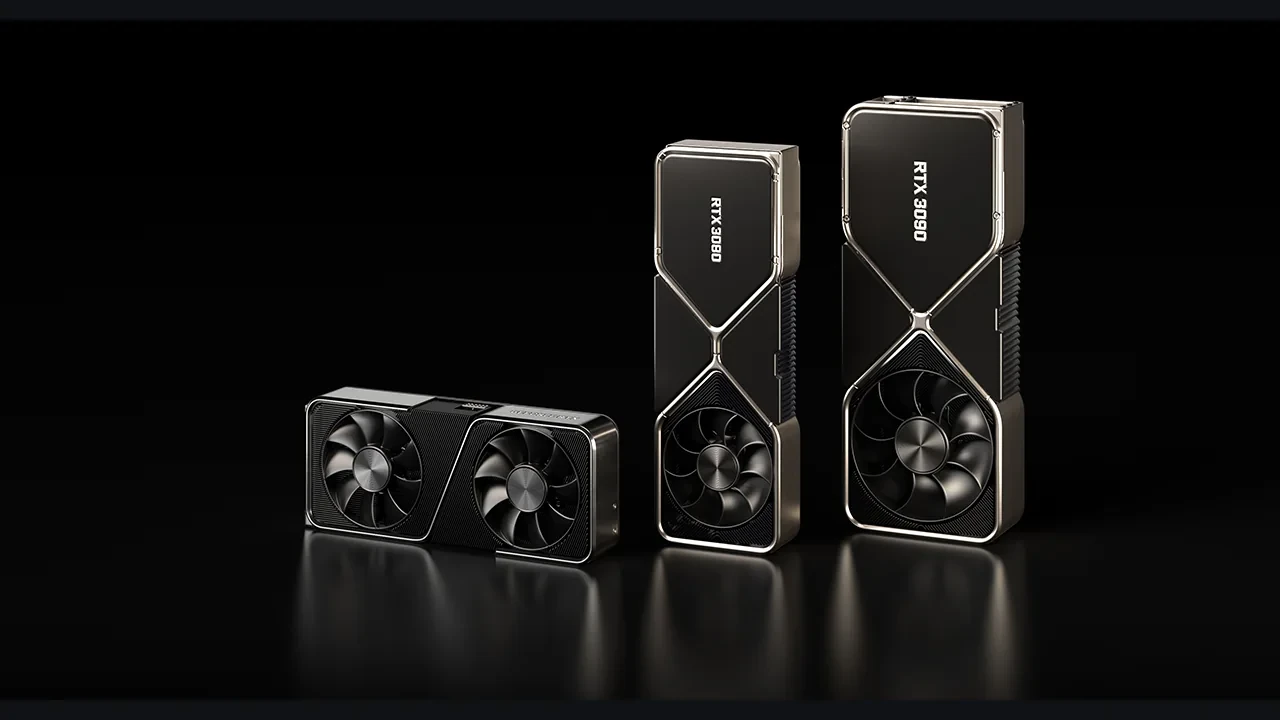

GeForce RTX 3090 DLSS 5 compatibility: the short answer for developers and players
The GeForce RTX 3090 is not on NVIDIA’s official DLSS 5 launch list. This desktop Ampere card uses third-generation Tensor Cores, but NVIDIA hasn’t announced it as a DLSS 5 target. Its confirmed path is DLSS 4.5, which includes Super Resolution and Ray Reconstruction.
Later support through a driver, runtime, or SDK revision remains an open question. A production team can record that uncertainty, but it shouldn’t build a schedule around it.
What NVIDIA has confirmed about DLSS 5
NVIDIA hosts the official launch material for its next major Deep Learning Super Sampling generation on its research pages. Developers should read the supported RTX series carefully, check whether Frame Generation, Super Resolution, and Ray Reconstruction are bundled or exposed separately, and look for a fallback route in the SDK for older hardware.
The SDK normally gates a feature through compute capability and required hardware units, including a specific Tensor Core generation. A card may have enough raster performance to run a simplified route in theory and still remain outside the approved path. That protects image quality and stability. It also explains how an RTX 3090 can be excluded from a new AI feature despite its raw throughput. NVIDIA’s launch and compatibility page is the authority for that decision and should be checked before public copy is approved.
The RTX 3090’s place in the Ampere generation
The RTX 3090 was the high-end desktop model in the RTX 30 series. It launched in September 2020 with 24 GB of GDDR6X, 10,496 CUDA cores, and third-generation Tensor Cores. It remained a flagship-class gaming and content-creation card for several years. Even so, Ampere sits one Tensor Core generation behind Ada Lovelace in the RTX 40 series and two behind Blackwell in the RTX 50 series.
That gap makes a free backport less likely. Tensor throughput per operation, supported data types, and sparsity acceleration all changed from Ampere to Ada and Blackwell. Similar public APIs don’t guarantee identical model or runtime requirements. The RTX 30 series Wikipedia entry supplies architectural and lineup context for engineers building a compatibility matrix.
DLSS 4.5 support on the GeForce RTX 3090
DLSS 4.5 is the highest-numbered branch officially available on the card at the DLSS 5 launch. Super Resolution rebuilds a higher-resolution image from a lower internal render. Ray Reconstruction replaces several hand-tuned denoisers in ray-traced lighting with a learned model. NVIDIA designed both for compatibility across multiple RTX generations, including the 3090.
A game can keep one DLSS 4.5 path across Ampere, Ada, and Blackwell while it stays inside that feature contract. Once a later release adds something beyond the 4.5 envelope, the 3090 is not a supported target for that feature unless NVIDIA changes the list. QA must represent the split.
How DLSS features have mapped to RTX hardware
The matrix summarizes NVIDIA’s published release pattern rather than attempting a full history. Super Resolution has traveled furthest across generations. Frame Generation initially stayed within one generation, while new model families have generally reached new silicon first. That is a planning precedent, not a guarantee.
| DLSS feature generation | Headline features | Officially supported RTX series (desktop) | GeForce RTX 3090 status |
|---|---|---|---|
| DLSS 2.x | Super Resolution, learned upscaling | RTX 20, RTX 30, RTX 40 | Supported |
| DLSS 3.x | Adds Frame Generation, Reflex integration | RTX 40 (Frame Generation exclusive to RTX 40) | Super Resolution supported; Frame Generation not supported |
| DLSS 3.5 | Ray Reconstruction, expanded model set | RTX 20, RTX 30, RTX 40 (Frame Generation remains RTX 40 only) | Super Resolution and Ray Reconstruction supported |
| DLSS 4.5 | Refined Super Resolution models, Ray Reconstruction refinements | RTX 20, RTX 30, RTX 40, RTX 50 | Supported |
| DLSS 5 | New model generation with revised compatibility boundaries | Per the official NVIDIA launch page | Not officially supported at the NVIDIA DLSS 5 launch |
What an RTX 3090 owner will see
A player with a GeForce RTX 3090 can continue to use any shipped DLSS 4.5 Super Resolution or Ray Reconstruction feature. DLSS 5 won’t run at launch. Existing options should keep working unless a developer makes the new generation a hard requirement; the card simply cannot select the new model when a game offers it.
Developers need to settle several details early:
- Keep an Ampere-compatible DLSS path or raise the hardware floor before rendering architecture is complete.
- If several generations ship together, decide whether DLSS 4.5 remains as a fallback or is removed to reduce QA at the cost of a smaller hardware base.
- Name each path clearly in the menu so players understand why an option is missing.
These choices belong in the technical design and the public compatibility notes, not in the last two weeks before release.
Build the renderer around explicit feature tiers
A mixed-hardware project needs a required baseline, a preferred tier, and any optional higher tier mapped to versioned, tested DLSS contracts. Test them on the actual cards rather than only on a developer’s newest GPU.
- Pin the DLSS SDK in the build just as you would DirectX 12 Ultimate or Vulkan 1.3, and fail the build when the expected dependency is missing.
- Exercise the lower end of the matrix on every release candidate. The RTX 3090 sits in the middle of today’s desktop RTX range and represents the hardware many players still consider good enough.
- Document what happens below the required tier. Native rendering with a warning and a hard block are both valid if QA and players can see the rule.
A useful design survives a DLSS feature the team didn’t anticipate. If one new flag forces a renderer refactor, the integration is carrying too much generation-specific logic.
Query support when the game runs
At startup, and again when the graphics panel opens, query NVIDIA NGX for supported features, model revisions, and valid hardware paths. Cache the result and build the menu from it.
On an RTX 3090, the current DLSS 4.5 query reports Super Resolution and Ray Reconstruction. A future SDK’s DLSS 5 flag should return false unless NVIDIA adds support. The game can omit that option or show it disabled with a hardware tooltip. Either choice works when it stays consistent.
A focused QA matrix is enough
Multiple feature generations expand the test space across GPU family, DLSS path, internal and output resolutions, and frame-time budget. It need not cover every permutation, but it must represent the shipping tiers.
The RTX 3090 is useful in the mainstream row. It can run most modern games at 1440p with ray tracing, and it exposes whether DLSS 4.5 truly improves frame time or merely hides an expensive renderer. Missing a target on this card tells the team something meaningful about its path.
| Test case | GPU representative | DLSS feature | Render resolution | Output resolution | Notes |
|---|---|---|---|---|---|
| Entry tier | RTX 2060 / RTX 3060 | DLSS 4.5 Super Resolution, Quality mode | 960 x 540 internal | 1920 x 1080 | Confirms the minimum path still scales acceptably. |
| Mainstream tier | GeForce RTX 3090 | DLSS 4.5 Super Resolution, Balanced mode | 1280 x 720 internal | 2560 x 1440 | Confirms Ampere still hits the frame time target with ray tracing on. |
| High tier | RTX 4080 | DLSS 4.5 Super Resolution, Performance mode | 1280 x 720 internal | 3840 x 2160 | Confirms the Ada path including Frame Generation where applicable. |
| Frontier tier | RTX 5090 | Latest DLSS generation on supported hardware | Per the new model contract | 3840 x 2160 | Confirms the new path works without breaking lower tiers. |
Separate SDK, runtime, and model failures
The game links NVIDIA Streamline or NGX, the driver exposes the GPU and runtime features, and the driver package supplies the neural model files. Check those layers in order when an option disappears.
- SDK: verify in the release notes that the linked version supports the requested feature on the target GPU.
- Runtime: confirm the installed runtime matches the SDK expected by the game. Version mismatches often produce “feature missing” reports.
- Model files: check their deployment path. Missing files can force a fallback model without the requested feature.
Model deployment is particularly easy to miss when a launcher sandboxes the install directory. A clean-system test with only the GPU driver installed should confirm that all expected DLSS features appear without manual fixes.
Tell players exactly which path they have
A compact support table with one feature per row and one GPU series per column can prevent most tickets. For the RTX 3090, say that DLSS 5 isn’t supported at launch and point to the DLSS 4.5 options that are.
Expect the same support questions to arrive through several channels:
- For forum posts about a missing DLSS 5 option, give the one-line hardware boundary.
- For comparison videos on newer cards, state that the RTX 3090 keeps its DLSS 4.5 path.
- For benchmarks that mix 4.5 and 5 without labels, point reviewers to accurate patch notes as the canonical reference.
The boundary needs no apology. It needs accurate wording in the graphics menu, FAQ, and patch notes.
Keep one owned compatibility record
Assign the DLSS matrix to a rendering or graphics engineer who can translate NVIDIA’s release notes into the project’s settings. Review it on the roughly monthly driver cadence, plus every SDK or major feature announcement. Update the public position when a new SDK lands, the game adds an option, or a player report shows the existing text is stale.
The internal record should contain the target generation, SDK version, feature support by GPU series, and the latest verification date. Public copy should come from that record. Otherwise engineering and support tend to drift apart.
Edge cases to put in the design review
- Laptop RTX 30 variants fall outside this desktop RTX 3090 statement. Mobile power and thermal limits make each laptop SKU a separate case.
- Older driver branches can expose a different feature set. Compatibility testing should start from a clean installation of the current driver.
- Community DLSS presets are not supportable by the studio. Say so briefly in the modding FAQ.
- Cloud streaming and remote-play layers can alter GPU composition. A bare-metal RTX 3090 result may not carry over to a streamed session.
Calling out these cases doesn’t solve them, but it stops an overly broad support claim from reaching players.
Milestone decisions for the technical lead
- Record the game’s current DLSS target in the rendering design.
- Confirm the RTX 3090 status against NVIDIA’s compatibility page.
- Decide whether DLSS 4.5 stays as the fallback for older GPUs.
- Make the graphics UI match supported capabilities and explain disabled options in one sentence.
- Add an RTX 3090 row to the public FAQ with supported and unsupported features.
- Assign the owner and date for the next driver or SDK review.
If one decision remains vague, resolve that before signing off on the milestone.
The older path does not disappear
A new DLSS generation does not remove the RTX 3090’s supported route. NVIDIA has historically kept Super Resolution and Ray Reconstruction working across several RTX generations. Studios should continue testing and documenting DLSS 4.5 for the long tail of owners who will use the card well beyond its launch window.
For the foreseeable future, the 3090 belongs in the stable-baseline column. Adopt DLSS 5 where official support, the install base, the QA plan, and the render budget agree.
Frequently asked questions
Does the GeForce RTX 3090 support DLSS 5?
No official launch support has been announced for the desktop RTX 3090. It is an Ampere RTX 30 series card whose current official path is DLSS 4.5 Super Resolution and Ray Reconstruction. Only an explicit NVIDIA update changes that answer.
What is the latest DLSS version available on the GeForce RTX 3090?
DLSS 4.5 is the latest officially available version and includes Super Resolution and Ray Reconstruction. Frame Generation from the broader DLSS 3 family is unavailable on RTX 30 series hardware, which is separate from the DLSS 5 limit.
Will future drivers add DLSS 5 to the GeForce RTX 3090?
NVIDIA hasn’t committed to adding it through a driver, runtime, or SDK. Because new features usually track particular Tensor Core generations and the 3090 uses Ampere’s third-generation cores, the safe assumption is no backport unless NVIDIA says otherwise.
Does DLSS 5 require new hardware?
It uses a new model generation and revised compatibility boundaries. The launch page names supported RTX series and excludes the 3090 at launch. Do not infer support for any RTX 30 card.
Will my existing DLSS 4.5 settings stop working when DLSS 5 ships?
No. They continue to work whenever the game retains its 4.5 path. DLSS 5 is an extra feature generation rather than a replacement for the older route.
What should a game studio do if the studio wants to ship DLSS 5 in a new title?
Add it as an optional path above a tested DLSS 4.5 baseline. Match the menu and public support statement to detected hardware, then test representative cards for both routes, including the RTX 3090 in the established tier.
Is the GeForce RTX 3090 still a useful card for game development in 2026?
Yes. Its 24 GB of GDDR6X remains useful for high-resolution texture work, and its raster performance can drive 1440p at high settings with ray tracing. Its 2026 limitation is access to the newest AI upscaling features, not a lack of present-day rendering capability.
Where can I verify the official DLSS 5 compatibility list myself?
Use NVIDIA’s DLSS 5 launch and compatibility page on the research portal. It lists supported series and feature boundaries and can be updated when support changes. The RTX 30 series Wikipedia entry is a secondary architecture reference.
What is the difference between DLSS 5, DLSS 4.5, and DLSS 3 Frame Generation?
DLSS 3 Frame Generation inserts intermediate frames using the Optical Flow Accelerator on RTX 40 hardware and isn’t available on RTX 30. DLSS 4.5 is the latest 3090-compatible generation, with Super Resolution and Ray Reconstruction. DLSS 5 is the next major generation governed by NVIDIA’s new support list.
Will DLSS 5 affect the minimum hardware requirements of my game?
Only if the game requires it. Keeping DLSS 5 optional above a stable DLSS 4.5 baseline lets the RTX 3090 remain a viable minimum or recommended target. Public requirements should describe that baseline without implying the new feature is mandatory.
Leave a Reply