

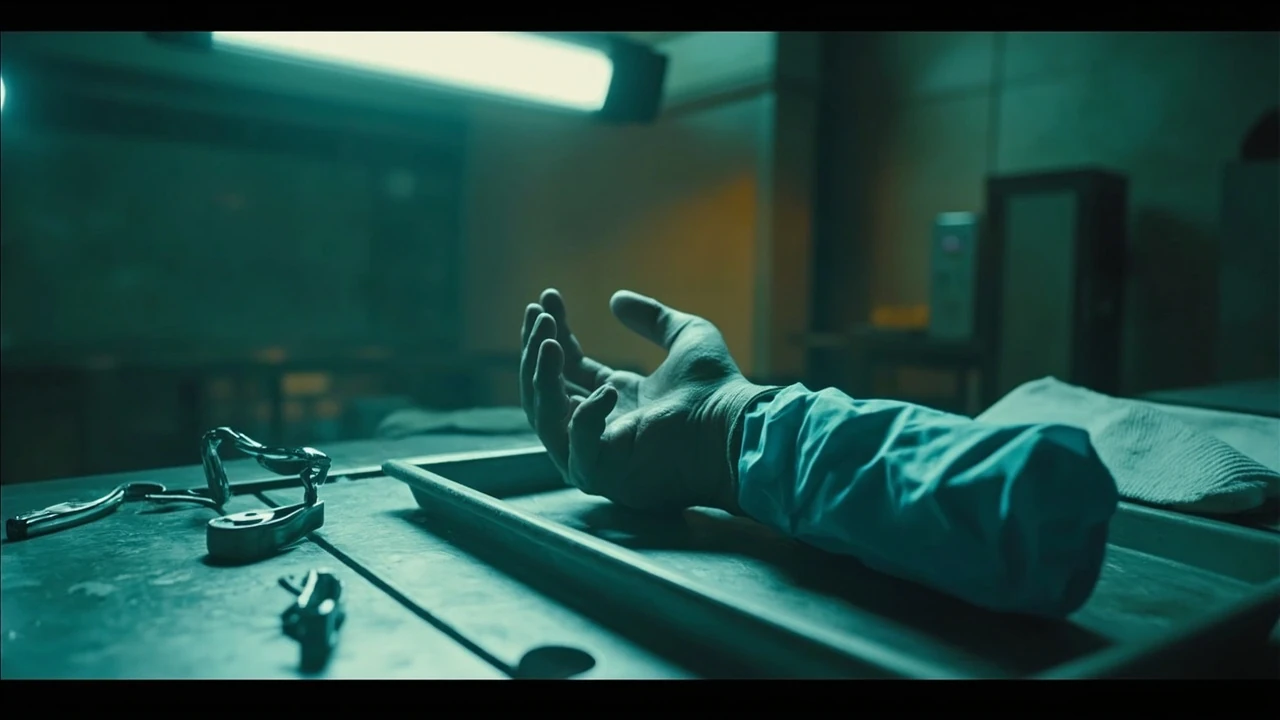

RE9 severed hand: what it means in Resident Evil Requiem
The re9 severed hand is one of the early visual motifs Capcom has used to set the tone of Resident Evil Requiem. It shows up in the studio’s promotional material and in the opening investigative segment that the developer has shown to press, and it has become a recurring reference point for players who want to read the game’s horror identity before launch. Understanding what the moment represents, where it sits in the narrative, and how the studio built the in-engine shot helps explain why a single body part carries so much weight in the marketing.
This article focuses on the re9 severed hand as a story element and production case study inside Resident Evil Requiem. It does not speculate about endings, future DLC, or unannounced content. Where Capcom or its development partners have confirmed a detail through official channels, that fact is treated as verified. Where the picture comes from previews, store descriptions, or hands-on reporting, the source is named so the reader can judge the weight of the statement.
Why the severed hand is part of Resident Evil Requiem’s identity
Resident Evil Requiem is the working title for the next numbered mainline entry in Capcom’s long-running survival horror series. The re9 severed hand reference is shorthand for the way the game reintroduces the franchise’s classic body-horror vocabulary. Capcom has a long history of using isolated limbs, mutated tissue, and clinical props to communicate danger without showing a full monster, and the severed hand in Requiem continues that approach.
From a production standpoint, a single hand is one of the hardest props to build convincingly. It needs correct bone hierarchy, accurate skin shading, believable joint deformation, and proper interaction with whatever environment the player sees it in. Building a shot around a hand rather than a full creature also gives the lighting and rendering team a focused subject to optimize, which is one reason the motif shows up in early marketing material.
The choice also fits a quieter style of horror. The series experimented with action-heavy set pieces in Resident Evil 5 and Resident Evil 6, then moved toward first-person tension in Resident Evil 7 and Resident Evil Village. Requiem appears to blend those impulses. A still, well-lit object in a quiet room is a stronger fit for that direction than a roped-off boss arena, and the hand is a compact way to deliver that feeling.
It is worth pointing out how unusual the choice is for a marketing lead. Most survival horror launches trade on monster silhouettes, logo slates, or villain reveals. Capcom has instead put a small, still, clinical prop on store pages and preview reels. That decision tells the audience what kind of pacing to expect before the first trailer finishes, and it gives the development team a stable visual hook that can survive multiple re-cuts of the same campaign.
Where the severed hand fits in the story so far
Capcom’s official materials place the re9 severed hand in the opening investigative sequence of Resident Evil Requiem. The studio has described Requiem as a return to the series’ survival horror roots, and the hand functions as the first physical evidence the player encounters that something is wrong with the environment. It is not framed as a collectible, and it is not presented as a puzzle solution. It is a piece of world-building that establishes stakes before any enemy is introduced.
Because the hand appears in the opening section, it also serves as a tutorial anchor. The player is invited to inspect it, which teaches the interaction system, camera distance, and contextual prompts that the rest of the game will rely on. Designers can use a static, well-lit object to onboard the player without breaking tension, which is more difficult with a moving enemy.
The room around the hand matters as well. Pre-release screenshots from Capcom show a clinical setting that reads as a research or medical space, with the hand placed on a tray-like surface. That staging is deliberate. Medical imagery has been part of the franchise since the original Spencer Mansion, and the same visual grammar reappears in the Raccoon City Police Department, the Baker house, and the village castle. A returning player reads the room instantly; a new player learns the rules of the world in a single look.
Players who have watched the preview footage will also notice that nothing in the room fights back. There is no scripted ambush around the prop, no audio jump scare, and no forced loss of resources. That restraint is itself a creative choice, because it tells the audience that the game trusts its first impression to come from what the player inspects rather than from what attacks them. A survival horror title that respects the player this early is signalling that the rest of the campaign will follow the same contract.
| Story element | Role of the severed hand | What it teaches the player |
|---|---|---|
| Opening investigation | First evidence of an outbreak or experiment | How to inspect an object in detail |
| Tutorial sequence | Static subject for interaction prompts | Contextual button layout and camera zoom |
| Atmosphere setting | Body-horror motif tied to franchise identity | Visual language for the rest of the chapter |
| Narrative foreshadowing | Hint at the source of the threat | Encourages environmental reading |
| Brand continuity | Callback to classic Resident Evil prop design | Reassures long-time fans of the tone |
| Marketing anchor | Reused across key art and store pages | Tells late-arriving players what kind of game to expect |
How the hand is built in the RE Engine
Resident Evil Requiem runs on a successor to Capcom’s RE Engine, the in-house technology that has powered the series since Resident Evil 7. The re9 severed hand benefits from the same rendering and animation systems that the studio has refined across the last three mainline entries. A short look at the production pipeline explains why the moment looks the way it does.
- High-resolution sculpt: The hand is modeled at a higher polygon count than a typical background prop so that close-up inspection reads as anatomical rather than stylized.
- Subsurface scattering: Skin shading uses multi-layer subsurface scattering to keep the flesh from looking like plastic under clinical lighting.
- Tissue variants: Artists prepare several material variants covering fresh, drying, and preserved states so the prop can be reused in different chapters.
- Rigged deformation: Even when the hand is static, fingers carry a small rig so wind, vibration, or interaction can move them without breaking the silhouette.
- Optimized LODs: Lower level-of-detail versions allow the same asset to appear at a distance without inflating memory budgets.
- Physics interaction: A lightweight collider allows the player to nudge the prop during inspection without the asset clipping through the tray or floor.
These production choices are consistent with what Capcom has documented for prior RE Engine titles. They are presented as the standard pipeline rather than as confirmed work on a specific internal file, since Capcom has not published a full breakdown of the Requiem asset list.
What that pipeline gives the player is a prop that survives a long, close-up camera push without breaking the illusion. The same rig that supports the inspection can also support an idle micro-animation, so the hand can twitch slightly under ventilation or shake when the player triggers nearby machinery. Those touches are not spelled out in any press release, but the preview footage shows them, and they are part of why the moment feels more grounded than a static decoration would.
How the severed hand connects to earlier Resident Evil games
Body parts as story objects are not new to the series. Players familiar with the franchise will recognize the design lineage. The re9 severed hand sits inside a tradition that goes back to the original PlayStation era, and the table below shows how the same kind of prop has been used across the mainline entries.
| Game | Comparable body-horror prop | Narrative function |
|---|---|---|
| Resident Evil (1996) | Laboratory specimens and jars | Establish Umbrella’s research |
| Resident Evil 2 (1998) | Mutilated cadavers in the police station | Foreshadow the Raccoon City outbreak |
| Resident Evil 3 (1999) | Experiment notes and hospital detritus | Frame Nemesis as a manufactured threat |
| Resident Evil 4 (2005) | Plagas-infected villagers and headcases | Introduce parasitic horror |
| Resident Evil 7 (2017) | Molded remains and family artifacts | Ground the Baker house in dread |
| Resident Evil Village (2021) | Lycan transformations and lab experiments | Blend folklore with bio-weapons |
| Resident Evil Requiem | Severed hand in the opening | Return to investigative horror |
Reading the severed hand in that context helps players who are new to the series understand why the prop carries weight. It is not a random shock image. It is a deliberate callback to a visual grammar the franchise has used for almost three decades, and the same grammar is what reviewers tend to mean when they describe a Resident Evil game as feeling “classic.”
That lineage also helps set expectations for pacing. Players who replay the original 1996 release today will recognize the same careful staging: a quiet room, a single object of dread, and a soft audio cue that primes them for the next hallway. Requiem appears to be reaching for the same rhythm, and the re9 severed hand is the first confirmation that the studio remembers how to write that rhythm.
What the severed hand tells the player about gameplay systems
A static prop in the opening of a survival horror game usually does more than decorate the room. The re9 severed hand is a small but useful test case for how Resident Evil Requiem communicates mechanics to the player without breaking immersion.
- Inspection depth: The hand can be examined from multiple angles, which signals that the world is interactive rather than a corridor.
- Inventory relevance: Inspecting the hand updates the player’s journal or evidence log, teaching them to use the in-game record system.
- Audio cues: A faint ambient sting plays during the inspection, normalizing the use of diegetic audio for storytelling.
- Risk preview: The same room introduces the first hazard, so the player learns to associate stillness with danger nearby.
- Camera discipline: The close-up camera teaches the player to manage distance, framing, and line of sight before a hostile encounter.
- Reading the environment: Labels, trays, and the tray’s position hint that other objects in the same room carry information rather than loot.
Each of those systems can be tested without combat, which matters in a horror game. Designers who rely on a tutorial enemy risk breaking tension, while designers who rely on signage risk breaking immersion. A well-staged prop solves both problems at once, and the rest of the opening can build on the trust the moment establishes.
For returning players, the system map is also a hint about how the game will distribute information later. If the opening chapter uses a journal, the same journal will probably return when a character disappears, a file goes missing, or a door refuses to open. That kind of consistency is a small but real quality-of-life win, and it is one of the quiet things long-time Resident Evil fans tend to notice first.
How the hand is presented in hands-on previews
Press previews of Resident Evil Requiem have included the opening sequence where the re9 severed hand appears. According to a hands-on report from IGN, the moment is staged with deliberate pacing: a slow pan, a single contextual prompt, and a quiet audio sting that primes the player for the room that follows. The preview describes the prop as one of the first opportunities for the player to use the new inspection system.
Press coverage of this kind is useful for the player because it documents how a build actually behaves, not how marketing implies it behaves. When IGN writes that the inspection camera pushes in close enough to read skin texture and the line of a tendon, that detail tells the player how the team tuned the scene. It also helps the developer-facing reader understand the priorities the team set for the asset: clinical lighting, controlled framing, and a small but deliberate set of player inputs.
IGN’s preview also notes that the player can switch between first-person and third-person perspectives during the inspection. That detail is worth pausing on. A hand prop behaves differently in the two cameras. In first-person, the player looks directly at the hand and the room is implied around it. In third-person, the camera frames the hand against the room and the player’s own body becomes part of the composition. Supporting both views from the same asset is a small production detail that has real implications for how the scene reads.
The preview also confirms that the scene does not force a specific camera mode. The player can opt into first-person for the inspection and then drop back to third-person for the corridor that follows. That choice matters because it teaches the audience that the camera toggle is a tool, not a setting buried in a menu. By the time a more dangerous area appears, the player has already used the toggle once and is comfortable reaching for it again.
How Resident Evil Requiem positions itself in the wider series
Capcom has framed Requiem as a return to the investigative, slower-paced horror of earlier entries. The re9 severed hand is a small piece of that positioning. It signals that the game wants the player to look, listen, and read environments before pulling a trigger. That philosophy is different from the action-heavy direction the series explored in Resident Evil 5 and Resident Evil 6, and it matters for how developers studying the game think about pacing.
For developers, the lesson is structural. A single, well-staged prop can do the work of a cutscene, a tutorial pop-up, and a narrative beat at the same time. The same approach can be reused in original projects, even at much smaller scale, by treating key objects as both world-building and onboarding tools. The hand in Requiem is a clean example of that approach working as intended.
For players, the positioning is reassuring. The series has long balanced two crowds: those who want a slow, resource-driven survival experience and those who want a more action-oriented Resident Evil. The marketing around Requiem, and the inclusion of a quiet, prop-driven opening, suggests that Capcom is willing to lead with the slower style and let the action build later in the campaign. That sequencing is consistent with how Resident Evil 7, Resident Evil Village, and the Resident Evil 2 and Resident Evil 3 remakes structured their early hours.
It also helps to be honest about what the positioning does not promise. Capcom has not said that Requiem will abandon action set pieces, weapon upgrades, or boss fights. The studio has said the tone will return to investigative horror, and the opening hand is a strong signal that the team is serious about that description. Players who want a full action game should wait for reviews before assuming the rest of the campaign matches the slow first hour.
Production lessons developers can take from the severed hand
Outside the franchise context, the re9 severed hand is a useful case study for any team building a horror or thriller game. A small, well-resolved prop often carries more weight than a fully modeled monster because the player’s imagination fills the rest. That production choice has practical consequences, and several of them are worth working through on a real project.
- Asset reuse: A high-quality hand can appear in multiple chapters with different materials, so the team gets more mileage from a single sculpt.
- Lighting practice: A static prop under clinical lighting is an ideal test case for material and lighting iteration before the team commits to a full scene.
- Animation budget: Because the hand can be mostly static, the animation team can spend its budget on creature rigs instead of filler props.
- Audio direction: Sound designers can experiment with subtle cues on a quiet object without masking combat audio.
- Accessibility planning: A static subject is a good place to test interaction prompts, text scaling, and controller remapping in early builds.
- QA handoff: A focused prop gives QA a controlled subject for bug reports on clipping, texture streaming, and prompt reliability.
- Localization: If the prop carries no text, it travels cleanly across regional builds, which keeps a global launch on schedule.
- Marketing reuse: A prop that the camera can frame tightly also works as key art, social cuts, and store thumbnails without extra shoots.
None of these techniques require a triple-A budget. They come from treating small props as deliberate storytelling tools rather than background dressing, and a team can apply them in a short commercial project just as easily as a long-running series entry.
What players should expect from the moment in the final game
Based on the preview coverage and the studio’s own descriptions, players who reach the opening sequence of Resident Evil Requiem should expect a short, focused scene built around the re9 severed hand. The hand itself is interactive, the room around it carries environmental storytelling, and the moment is followed by a transition into a more active area. The exact timing of the scene may shift between preview builds and the final release, but the design intent appears consistent across reporting.
Players who want to prepare for the moment can do three useful things. First, they can revisit the opening of Resident Evil 7 to see how Capcom used a similar slow-build approach with the Baker house. Second, they can read the Resident Evil Requiem article on Wikipedia for the broader series context, the development team, and the confirmed platforms. Third, they can wait for the official release notes from Capcom for any final adjustments to the opening sequence.
It also helps to manage expectations around spoilers. The severed hand is one of the few visual elements Capcom has actively used in marketing, which means it is unlikely to mark a major plot turn on its own. If a future trailer hides the hand or replaces it with a different prop, that change is more likely to be about tone than about a narrative secret. Players who want the cleanest experience can treat the marketing image as a baseline and avoid fan breakdowns of the opening sequence until they have played it themselves.
On a practical level, the scene also rewards a slower controller. Players who sprint past the prop will still get the chapter’s main beats, but they will miss the lighting, the audio sting, and the journal entry that frame the rest of the chapter. The design clearly rewards reading, and that is the contract the rest of the campaign will keep.
What is still unknown about the severed hand scene
Several details about the re9 severed hand have not been confirmed and should be treated as unknown until Capcom publishes them. The list below is a working checklist, not a prediction, and it will shrink as the studio releases more information through its official channels.
- Whether the hand returns later in the story in a different form.
- Whether it can be picked up and used as an inventory item.
- Whether the inspection triggers any branching dialogue.
- Whether difficulty settings change the level of detail shown during inspection.
- Whether accessibility options allow the player to skip the close-up camera push.
- Whether the hand’s owner is named in the opening chapter or revealed later.
- Whether the prop is tied to a specific chapter’s collectible set.
- Whether the scene length changes between the opening tutorial and a returning player’s new-game-plus run.
Each of those questions is answerable through playtesting once the game ships. Until then, the responsible position is to keep the list visible and avoid speculation, especially around story beats that could spoil the opening for other players.
How the moment fits into Resident Evil Requiem’s release plan
Resident Evil Requiem is positioned as a current-cycle release, and Capcom has aligned the marketing beats with major platform events. The re9 severed hand has been used in pre-launch coverage because it is short, non-spoilery, and easy to localize. It also ages well across trailers, which means the same asset can be reused in different cuts without looking stale, and it works at multiple aspect ratios for store pages, social posts, and broadcast spots.
For developers thinking about how to plan their own launch assets, the takeaway is straightforward. Choose a small, high-quality prop that captures the tone of the project and reuse it in trailers, key art, and store pages. The consistency reinforces the brand without locking the team into a single image, and it gives the localization team a single visual reference to keep aligned across regions.
Capcom has also used the hand to seed hands-on coverage. Press previews of Requiem have leaned on the opening sequence because it is easy to share under embargo and because it sets the tone for the rest of the build. That strategy lets the studio control the first impression of the game without revealing any later set pieces, and it gives reviewers a common starting point for their writing.
It is also worth noting how the asset fits the platform strategy. Console store pages, PC storefronts, and handheld screenshots all need different aspect ratios, and a tightly framed prop scales across them without the team having to re-cut a new piece of key art for every channel. The same prop can anchor a 16:9 hero image, a 1:1 social post, and a 9:16 short without losing the focal point, which keeps the global launch on schedule.
How the severed hand compares to other horror game openings
Outside Resident Evil, the prop-driven opening has a long history in survival horror. Silent Hill has used still rooms and found objects to build dread since the original PlayStation entry. The recent indie scene has leaned on the same approach, with games like Amnesia and Outlast staging their first scares around inspection prompts rather than monsters. The re9 severed hand sits comfortably in that tradition, and the table below maps the pattern across a few reference points.
| Game | Opening prop or scene | What it establishes |
|---|---|---|
| Silent Hill (1999) | Dark road and found photograph | Tonal dread and personal stakes |
| Amnesia: The Dark Descent (2010) | Empty castle and handwritten note | Inspection-driven exploration |
| Outlast (2013) | Hospital intake forms and dead lights | Powerless protagonist rules |
| Resident Evil 7 (2017) | Baker family video tape | First-person reframing of the series |
| Resident Evil Village (2021) | Village snow and Castle Dimitrescu gate | Scale and fairy-tale framing |
| Resident Evil Requiem | Severed hand in clinical room | Return to investigative horror |
Reading Requiem against those reference points is useful for new players. It signals that the game expects the audience to slow down, read the room, and accept that quiet moments are part of the design rather than padding between action scenes. That contract has been part of the genre for decades, and Requiem’s opening is a clean way to renew it.
It is also worth noting what the comparison does not support. None of those reference games treat the opening prop as a marketing centerpiece the way Capcom has with the re9 severed hand. The hand is doing the work that a cinematic, a logo slate, or a villain reveal usually does in a launch campaign, and that choice is itself a statement about how the studio wants the game to be read on store pages.
Frequently asked questions
What is the re9 severed hand in Resident Evil Requiem?
It is a body-horror prop that appears in the opening sequence of Resident Evil Requiem. Capcom uses it as the player’s first piece of physical evidence that something is wrong in the environment, and it doubles as a tutorial anchor for the inspection system.
Is the severed hand a tutorial item or a story item?
It works as both. The prop teaches the player how to inspect objects and update the in-game record, and it also establishes the tone and stakes of the chapter without breaking into a cutscene.
Does the severed hand connect to any earlier Resident Evil game?
It continues the franchise’s long tradition of using isolated body parts and clinical props to communicate danger. The visual grammar goes back to the original 1996 release and has been refined through every mainline entry since.
Is the severed hand scene confirmed for the final release?
Capcom has shown the opening sequence in press previews, and the moment is part of the marketing for Resident Evil Requiem. The exact timing and camera work may change between preview builds and the final release.
Where can I read more about Resident Evil Requiem’s development?
The Resident Evil Requiem entry on Wikipedia collects the confirmed development team, the announced platforms, and the release context. The IGN hands-on preview linked earlier in this article describes how the opening sequence plays in the current build.
Why does Capcom use body parts as horror props?
Isolated body parts focus the player’s attention on a single, well-rendered object and let imagination handle the rest. The approach is efficient for production and consistent with the franchise’s body-horror identity.
Will the severed hand be used in future Resident Evil Requiem marketing?
Capcom has reused the prop across trailers and store pages because the asset is short, easy to localize, and tonally consistent with the rest of the campaign. It is reasonable to expect the same image to appear in further pre-release material.
Are there accessibility options for the close-up inspection?
Capcom has not published a final accessibility list for Resident Evil Requiem. Players who want a definitive answer should check the official accessibility page on the Resident Evil site once the game ships.
Does the severed hand appear in any puzzle or boss fight?
No puzzle or boss fight built around the hand has been confirmed. The prop is currently documented as a world-building and tutorial anchor in the opening sequence.
How can developers apply the same technique in their own games?
Treat a small, high-quality prop as a deliberate storytelling tool. Use it to onboard the player, set tone, and seed the world. Reuse the same asset with different materials across chapters to stretch production budgets without losing visual cohesion.
“`html
Leave a Reply