


Silksong heart of the woods: what the area actually is
Silksong heart of the woods is the working name for one of the most discussed zones in Hollow Knight: Silksong, the long-awaited follow-up to Team Cherry’s 2017 action metroidvania. The area has appeared in trailers, demo builds at press events, and in the studio’s pre-release materials, and it sits at the thematic center of the second act. Players associate it with a deeper, older section of the bug kingdom where the wood itself feels alive, and where Hornet is meant to confront a more personal thread of the story rather than just another regional boss.
For players, the phrase raises a clear set of practical questions: where the zone sits on the map, what kind of enemies and traversal it contains, what reward sits at the end, and how it changes Hornet’s abilities. For developers, the area is an interesting case study because it condenses several design lessons that matter outside the game. It shows how a sequel can reframe a familiar world without rebuilding it from scratch, how a single biome can carry narrative weight, and how a small team can communicate mechanical change through environmental storytelling alone. The remainder of this article walks through the known design signals, the mechanics the area seems built around, the production context that shaped it, and the practical decisions players and developers can take from it.
What we actually know about the zone
Heart of the Woods has surfaced in multiple official materials since the original Hollow Knight: Silksong announcement, including the first gameplay trailer, the longer deep-dive shown at press events, and descriptions that Team Cherry has used in interviews. It is presented as an older, more overgrown counterpart to the Greenpath areas in the first game, with thicker verticality, denser foliage, and a sense that the area predates the kingdom around it. The studio has been careful not to frame it as a single boss arena or a corridor to a final fight. The framing instead suggests a mid-game biome that introduces new traversal options and then closes a narrative beat before the run pushes into the late-game regions.
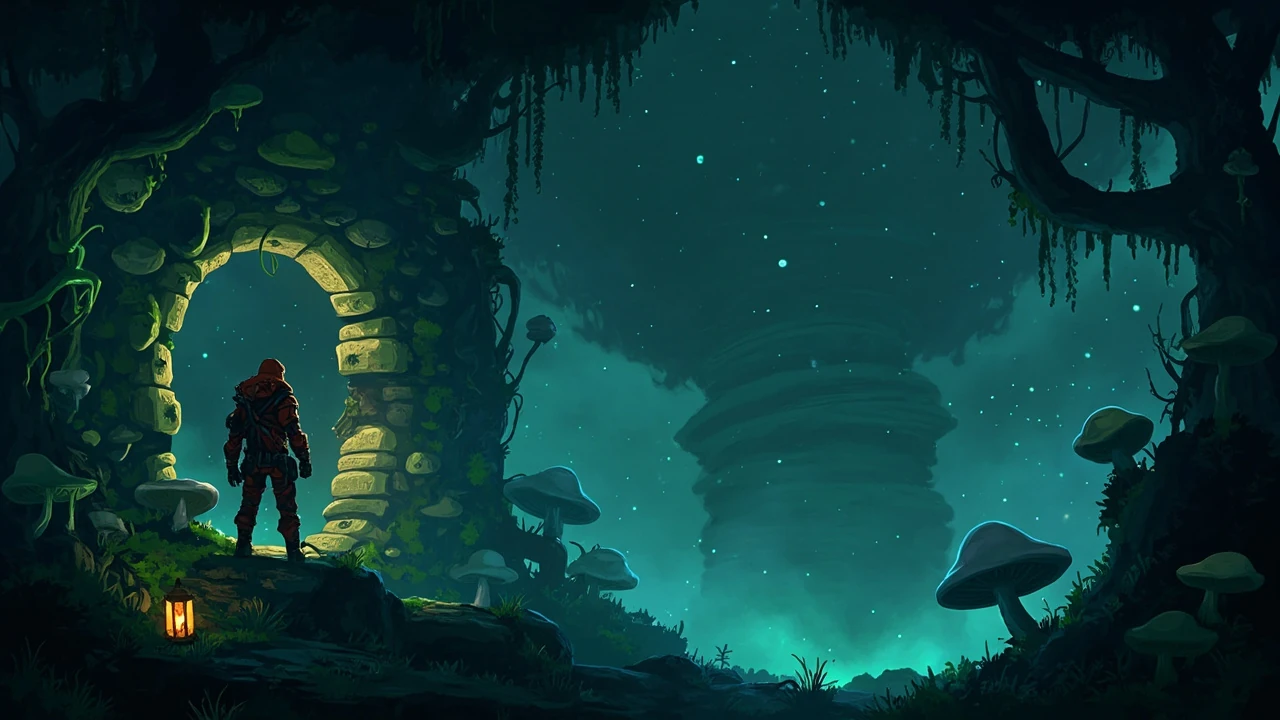
Players who watched the trailers closely will recognize several recurring signals: layered canopy with shafts of light, large pale mushrooms that double as platforms, enemy types that use the vertical space, and an undertone of decay that contrasts with the warmer color palette of earlier zones. The area is associated in fan discussion with a character of the same name, but it is best understood as a biome first, with a character encounter attached to it. Treating the phrase as both a region and a story beat is a useful way to keep player and developer interpretations aligned when reading the marketing materials.
One detail worth pulling out of the trailers is the lighting. Earlier zones in Silksong rely on warmer, more direct light sources. The Woods lean on shafts of cold teal that drop between thick trunks and broken stonework. That choice is not decorative. In 2D action design, lighting is often the cheapest way to change how a familiar kit reads, because the player stops trusting the silhouettes they have already learned and starts reading new ones. The Woods’ lighting is the clearest signal in the marketing that the area is meant to feel like a different kind of run, not a reskin of an earlier biome.
How it fits the broader Silksong world
The first Hollow Knight built its progression around a central hub, the Forgotten Crossroads, that the player kept returning to as new traversal options opened up. The sequel changes that pattern. Instead of one giant hub, Silksong seems to use a more distributed hub structure in which several regions act as soft waypoints, and Hornet moves between them more freely than the Knight ever did. Heart of the Woods sits roughly in the middle of that structure. The earlier zones teach the player how Hornet’s movement kit differs from the Knight’s, and the later zones are built around the harder combat and traversal tests the kit enables. The Woods are the moment where those lessons are tested in an environment that resists the player’s habits.
That structural choice has a clear production rationale. It gives Team Cherry a place to introduce new enemy behavior, verticality, and resource pressure without locking those changes behind a hard difficulty spike. The early zones can be forgiving while the player learns, the late zones can be punishing because the player has already committed to the kit, and the Woods can do the work of converting the player’s optional tools into required ones. It also gives the narrative room to breathe. The Hollow Knight series uses biome storytelling as much as dialogue, and the Woods carry weight because the player has already learned to read spaces, and then encounters a space that reads differently.
For developers thinking about hub design, the practical lesson is that the central biome is usually the one that sets the difficulty curve for everything that follows. A team that designs the hub first and then builds the edges outward will usually end up with a tighter run than a team that designs the edges first and tries to glue them to a hub later. The Silksong marketing suggests the studio has internalized that order of operations, and the Woods are the visible result.
Why the area is a useful case study for developers
For developers and technical artists, the Woods are a small but clean example of several decisions that recur in 2D action design. The biome shows how a small studio can introduce a new traversal vocabulary without replacing the old one, how to use color and lighting to change how a familiar kit reads instead of rebalancing the kit itself, how to anchor a narrative beat to a single environmental location rather than to a long dialogue sequence, and how to create mid-game pacing relief by giving the player a region that asks for care rather than execution speed.
The point is not to copy Team Cherry’s specific choices. It is to recognize that the biome is doing several jobs at once, and that the same pattern of layered responsibilities tends to show up in any 2D action project that needs a strong mid-game. A small team cannot afford to dedicate a single biome to a single job. The biomes that feel like the most memorable parts of a run are usually the ones that carry traversal, combat, story, and pacing at the same time, and the Woods are a useful reference for that kind of layered design.
Player-facing expectations for the run
If you are playing Silksong when the area becomes reachable, the practical questions come down to preparation, route, and reward. The list below reflects the kinds of checks that have been useful in similar mid-game biomes in the first game and that players tend to apply during the early days of a Silksong playthrough. None of these are confirmed in stone. They are habits that have held up across the series, and that the marketing suggests the Woods will continue to reward.
- Confirm that the kit is current. Heart of the Woods appears to expect Hornet’s mid-game movement tools to be unlocked, so backtracking for a missing traversal ability is a likely cause of a stuck run.
- Inventory the healing options. Biomes that lean into vertical combat and timed enemies tend to drain healing resources faster than linear corridors.
- Check the bench network. The first Hollow Knight used a tight bench placement to control difficulty spikes, and the sequel’s marketing has suggested a similar approach with quieter safe rooms tucked into the vertical layers.
- Note the NPC requests. The series uses deliverable quests as a soft guide through optional content, and several side characters have been shown in and around forested areas.
- Save currency for a likely bench or trap purchase. Mid-game biomes often hide a vendor that sells the one tool the area quietly assumes you brought, and the Woods are a good candidate for that pattern.
- Mark the map fragments. The series gates the map behind purchasable fragments, and a mid-game biome with dense verticality is a strong candidate for placing fragments in places that force the player to commit to a route before they can read the room.
The exact checks will shift once the game is in players’ hands. The pattern, however, is stable: in a series built on tight resource and route decisions, a mid-game biome is the place where inventory discipline and route awareness start to matter more than raw reaction time.
Design intent behind the biome
Reading the trailers and the early press materials, three design intents stand out. The first is a shift in tempo. The earlier zones teach quick combat exchanges; the Woods slow the player down with taller rooms and longer sight lines. The second is environmental storytelling. The visuals lean into older, more decayed architecture, with the implication that this part of the kingdom remembers a different history than the areas the player has just cleared. The third is mechanical bridging. The area is where the new tools Hornet brings into the sequel stop being optional and become the expected way to move.
These intents line up with the way Team Cherry has talked about progression in interviews around the first game. Progression is framed less as stat growth and more as a shift in what the player chooses to engage with. A biome that pushes the player toward vertical, deliberate play is consistent with that philosophy, and it explains why the marketing leans so heavily on the room shape rather than on specific enemy reveals.
For developers, the deeper signal is that the studio is willing to slow the run down in a sequel that has to honor a faster, more mobile protagonist. That is a deliberate trade. A faster kit in a slower biome is harder to design than a faster kit in a faster biome, because the player has more time to read the room and more room to make mistakes. The Woods look like the place where Team Cherry accepted that trade in order to keep the mid-game from feeling like a victory lap for the new movement tools.
How the area differs from the Greenpath regions
Players familiar with the first game will naturally compare the Woods to Greenpath, the green and earthy mid-game area. The two are similar in palette and mood, but they sit at very different points in the run. The table below summarizes the practical differences players should expect, based on the materials Team Cherry has shared and on how the sequel has framed each region.
| Aspect | Greenpath (Hollow Knight) | Heart of the Woods (Silksong) |
|---|---|---|
| Run position | Early-to-mid game, after Forgotten Crossroads | Mid game, after initial traversal expansion |
| Color palette | Soft greens, warm light, organic shapes | Deeper greens, cooler fog, larger vertical silhouettes |
| Traversal focus | Horizontal exploration and dash timing | Vertical movement, longer falls, layered platforms |
| Combat rhythm | Short enemy groups, predictable patterns | Wider sight lines, mixed ground-and-air threats |
| Narrative role | Introduces the infected kingdom’s spread | Anchors a personal beat in Hornet’s arc |
| Player takeaway | Learn the dash-cancel rhythm | Commit to the new vertical kit |
| Bench density | Frequent, used as a teaching tool | Sparser, used as a difficulty lever |
| Sound design | Bright acoustic palette, short motifs | Lower strings, longer ambient pads, slower tempo |
The two biomes are not identical in design role. Greenpath is about learning the kit. The Woods are about committing to it. That difference is the simplest way to read the area in advance, and it is the reason the table above puts player takeaway as the final row. The expected behavior is the real product.
Enemy design and combat expectations
Trailers for Silksong have shown a mix of grounded and aerial enemies in forested sections. The combat signals are consistent with a mid-game region that wants to punish the player for staying on the ground too long. Larger airborne enemies, projectiles that travel along the vertical axis, and grounded enemies that move in wider arcs are the kinds of patterns the materials suggest. The practical implication is that Hornet’s tools that handle aerial targets, including the needle’s upward arc, the silk-driven dash, and any ranged utility, will see more use here than in earlier zones.
For developers, the design lesson is that enemy kits can be balanced against a specific movement vocabulary. The first Hollow Knight was designed around a movement vocabulary built on a short dash, a downslash, and a wall jump. Enemies in that game are tuned to be readable with those tools, and many of them are easier or harder depending on how the player uses that vocabulary. The sequel can ask enemies to be readable with a different vocabulary without raising the raw number of enemy types. A small set of enemies, each tuned against a specific player behavior, is often enough to make a region feel distinct.
The combat expectations also point to a small but useful pattern: the hardest enemies in a vertical biome are usually the ones that force the player to commit to a direction. An enemy that arcs across the room, or that fires along the vertical axis, asks the player to choose a path through the air and stick to it. That is a different kind of difficulty from a fast, high-damage enemy on a flat plane, and it is a useful design tool for any team that wants to vary combat pressure without rebalancing enemy stats.
Traversal, verticality, and room shape
Verticality is the single biggest design signal in the marketing. The Woods’ rooms appear to be taller and narrower than the early-game rooms in Silksong, with platforms that require specific movement options to reach. The wider implication is that the area is a stress test for the player’s commitment to the new kit. If a player has been carrying older habits, this is where those habits start to fail. That is a useful pattern to recognize as a developer. A mid-game biome can be the moment where the player stops treating new mechanics as optional and starts treating them as required, and the room shape is the lever that makes that conversion feel natural rather than forced.
The traversal signals also point to a softer pacing decision. Because vertical rooms ask the player to commit to longer sequences, the studio can place benches, shortcuts, and checkpoints at a rhythm that lets the player recover from a fall. That is a quieter kind of difficulty design. It does not change the enemies; it changes the room shape and the placement of safe ground. A team that wants to make a region feel harder without raising the raw damage numbers can usually do it by tightening the safe ground first and adjusting the enemy placement second.
For players, the practical habit is to read the room from the bottom up before committing. The first game trains the player to look at the horizontal layer they are on. The Woods ask the player to read the vertical layers above and below, because the platforms and the enemies are stacked in ways that only make sense once the player has scanned the whole column.
Narrative role in Hornet’s story
For additional context, storytelling in Hollow Knight: Silksong leans on environment, and the Woods are the first biome that is described in terms of an older memory rather than a present threat. The visual cues, including the deeper palette, the older architecture, and the slower combat rhythm, all support a beat in which Hornet is meant to confront a piece of her own past rather than an external obstacle. That is consistent with the way Team Cherry has described the sequel as more character-focused than the first game.
For developers thinking about narrative pacing, the lesson is that a single biome can carry a story beat if its visual and mechanical choices line up with the beat. A faster biome would not carry the same beat. A more dialogue-heavy section would not carry the same beat. The Woods are a case study in how a region can be the scene, the lighting, the cast, and the climax of a small narrative arc at the same time, and they do it without forcing the player into a cutscene.
It is also worth noting that the narrative role of the area is not the same as its plot role. The plot of a Silksong run will depend on which NPCs the player finds and which requests they complete, and the marketing has been careful not to lock any of that down. The narrative role of the Woods, as a beat in Hornet’s arc, is more stable, and it is what most players will feel even if they take different routes through the area.
Production context that shaped the area
Team Cherry is a small Australian studio that built the original Hollow Knight with a deliberately tight team and a long pre-release period. The sequel has followed a similar approach, with public development updates that focused on systems, regions, and movement rather than on specific release dates. The Woods are the kind of biome that benefits from a long pre-production cycle. They sit at the structural midpoint of the run, which means their layout, verticality, and pacing decisions have to be set before the later biomes can be tuned against them. A studio that commits to a long pre-production phase can make those central decisions with full information about what comes after.
For other teams, the takeaway is less about the size of the studio and more about the order of decisions. The biomes that sit at the structural midpoint of a run are usually the ones that should be locked earliest, because every later biome has to be balanced against them. Starting from the edge of the world and working inward is a common mistake in 2D action design, because the center has to be retrofitted to the edges, and the retrofit usually shows. The Hollow Knight approach is closer to starting from the middle and working outward, which gives the central biomes a stronger design identity and leaves the edges to do the lighter work of routing the player back to the center.
How players approach similar biomes in other metroidvanias
The combination of verticality, mid-game role, and narrative weight is a common pattern in the wider genre. Players who have spent time in games such as Metroid Dread, Blasphemous 2, or the recent Castlevania tributes will recognize the structure. The list below collects the practical habits that tend to transfer between these games, with a note on how they apply to a Silksong run.
- Backtrack for the missing tool. If a room asks for a movement option the player does not have yet, the right move is usually to leave and find the option, not to brute force the room.
- Map before moving. The series uses purchased map fragments to make the player commit to a region before seeing its layout. Reading the map carefully in a safe room is a habit that pays off across the genre.
- Track bench density. A biome that hides its benches is usually a biome the designers expect the player to struggle in. Looking for the bench first changes how the rest of the room reads.
- Save optional resources. The series uses healing and currency as a soft timer on optional exploration. Spending both early in a vertical biome tends to make the second half of the biome harder than it needs to be.
- Note the soundtrack. Each biome in the series uses its music as a pacing signal. A change in tempo usually means a change in expected player behavior, and the Woods’ slower mix is a useful cue to slow down.
None of these are unique to Silksong. They are part of a wider genre vocabulary. The reason they matter for a Silksong player is that the Woods are the first biome where several of them apply at once, which is part of what makes the area feel like a real test rather than another corridor.
Developer takeaways for a 2D action project
If the goal is to extract reusable lessons from the way Heart of the Woods is structured, the most useful points are not the specific art or enemy choices. They are the order in which those choices were made and the way the biome’s design intent maps to the player’s expected behavior. The table below summarizes the most reusable lessons for a small team building a 2D action game with a non-linear run, and pairs each lesson with the practical change it suggests.
| Lesson | Practical change for a small team |
|---|---|
| Lock the central biomes first | Pick the mid-game biome and lock its room shape, bench density, and enemy vocabulary before designing the edges. |
| Use the biome to teach the kit | Design rooms so that the new movement tool is the only safe path, and place benches at the top of those rooms. |
| Separate combat pacing from combat tuning | Change enemy placement and sight lines between rooms rather than rebalancing enemy stats. |
| Anchor story to environment | Pick one biome per story beat and let the lighting, palette, and soundtrack carry the rest. |
| Plan benches as a pacing tool | Treat bench placement as a difficulty curve, and design the curve before designing the rooms. |
| Use lighting to reset expectations | Switch the dominant light source when the player enters a biome, even if the kit has not changed. |
These are the kind of decisions a small team can actually make. They do not require a large art team, a complex toolchain, or a long production cycle. They require a clear order of operations and a willingness to lock the central designs before the edge designs, which is the part that most small teams underestimate until it is too late to change.
Open questions that only playtime can answer
Even with the marketing materials and the press previews, several practical questions about the biome are still open. The list below is the kind of thing a player or a developer should expect to update once the game is in wider hands. None of them are deal-breakers for the design analysis above; they are the practical numbers that the marketing has not yet shared.
- Exact room count and bench density, which set the effective difficulty of the area.
- Whether the biome includes a boss, a mini-boss sequence, or only elite enemies, since the marketing has hinted at each option without committing to one.
- The order in which the area is reached on a typical run, since route changes are common in this genre once the player base has had time to experiment.
- The specific tools Hornet is expected to have before entering, and whether the biome gates some of them behind its content.
- How the area’s soundtrack and ambient sound change between exploration and combat, which the series has used as a strong pacing signal in the past.
- Whether the area’s NPCs are tied to requests that require the player to leave the biome and return, which would change how the optional content is sequenced.
These are normal questions for a mid-game biome in a non-linear game. They are also the questions a developer should be ready to answer when designing a similar region in a different project, and the most useful answers tend to come from playtest data rather than from design intent alone.
How to read the trailers without overreading them
It is worth closing with a note on how to read the marketing materials without projecting more onto them than the studio has actually shown. Trailers are designed to communicate mood, verticality, and a sense of new tools. They are not designed to communicate room count, bench placement, or exact difficulty. The useful habit is to separate the signals that are clearly intentional (lighting, verticality, color palette) from the signals that are probably incidental (specific enemy placement, exact room shape) and to plan a run around the first set rather than the second.
For developers, the same habit applies to looking at another studio’s work. The biomes that look the most polished in trailers are usually the ones whose design intent is the most visible, and the design intent is the part that can be transferred between projects. The exact art, the exact enemy kit, and the exact room shape are the parts that should be treated as reference rather than as a template, because a small team that copies the surface without the order of operations will usually end up with a region that has the same look and a worse run.
Frequently asked questions
Is Heart of the Woods a region or a character?
It is a region, a mid-game biome, and the name of a character tied to that region. The two are connected in the story, but in terms of what the player navigates, the phrase refers to the forest area itself.
Where does it sit on the Silksong map?
Based on the marketing materials, the area sits in the middle of the run, after the early traversal expansion and before the late-game regions. The exact entrance is not yet known, but the area appears to be reachable from more than one direction.
Do I need specific abilities before entering?
The trailers suggest the area expects Hornet’s mid-game movement tools. If a run is hitting a wall in the Woods, the most likely cause is a missing traversal ability rather than a reaction time issue, and backtracking is usually the right move.
Is the area harder than the early-game biomes?
It is presented as a difficulty step up, but the difficulty is expressed through room shape, verticality, and bench placement more than through raw enemy damage. Players who have already committed to the new kit tend to find the area fair.
Are there NPCs or quests in the biome?
The marketing has shown NPCs in forested areas, and the series uses side characters to guide the player through optional content. A small number of side requests are likely to live in or around the Woods, but the exact list is not confirmed.
Does the area change Hornet’s abilities?
The area is more likely to test Hornet’s existing abilities than to grant new ones. New abilities in the sequel tend to be tied to specific questlines or major bosses rather than to mid-game biomes, and the Woods seem to follow that pattern.
How long is the biome in a typical run?
Trailer timing suggests a multi-hour section in a first run, with the option to revisit the area later in the game. The exact number depends on the player’s route and on how much optional content they decide to clear.
What should a developer take from the biome?
The most reusable lessons are the order in which a central biome should be designed, the way room shape can convert optional mechanics into required ones, and the use of environmental storytelling to anchor a small narrative arc without a long dialogue sequence.
Will the area be different on PC and consoles?
No platform-specific changes have been announced. The series has shipped a single design across platforms, and the sequel is expected to follow the same approach. Any performance or input differences will come from the underlying platform, not from a redesigned biome.
How does the soundtrack in the area compare to the first game?
The Hollow Knight: Silksong team has hinted at a wider range of instrumentation for the sequel, and the Woods’ trailers show a softer, more layered mix than the first game’s Greenpath. The exact comparison will be clearer once the game is in players’ hands.
Leave a Reply