


pokemon za starters: what is confirmed, what is rumored, and how the choice works
Choosing a starter creature is one of the first mechanical decisions a player makes in any mainline creature-collection role-playing game, and the question of which pokemon za starters will be available has shaped the conversation around the title since its announcement. The setting shifts the series to the Kalos region and the city of Lumiose, but the starter trio is still the moment that defines a player’s opening hours, their early access to type matchups, and the long arc of their team. Because official material has been selective and datamined leaks are partial, a careful player wants to separate confirmed facts from speculation, and a careful writer wants to map the gaps honestly. This guide tracks the official starters, summarizes the credible leaks and their sources, and explains how the choice interacts with the game’s combat and exploration loop.
The reason this question gets asked so often is that starters set the tone for the entire playthrough. They determine which gym leaders feel easy or hard, which wild areas are safe to wander through in the first ten hours, and how the team handles the rival battles that punctuate the story. A reader who only needs the names can scan the table, while a reader who wants to plan around type matchups, base stats, and the implications for the Lumiose-focused storyline can read the section that explains the design intent behind the trio. Everything that follows is written for a player who has to make a real choice on launch day, not for a casual viewer skimming a rumor roundup.
What pokemon za starters are officially confirmed
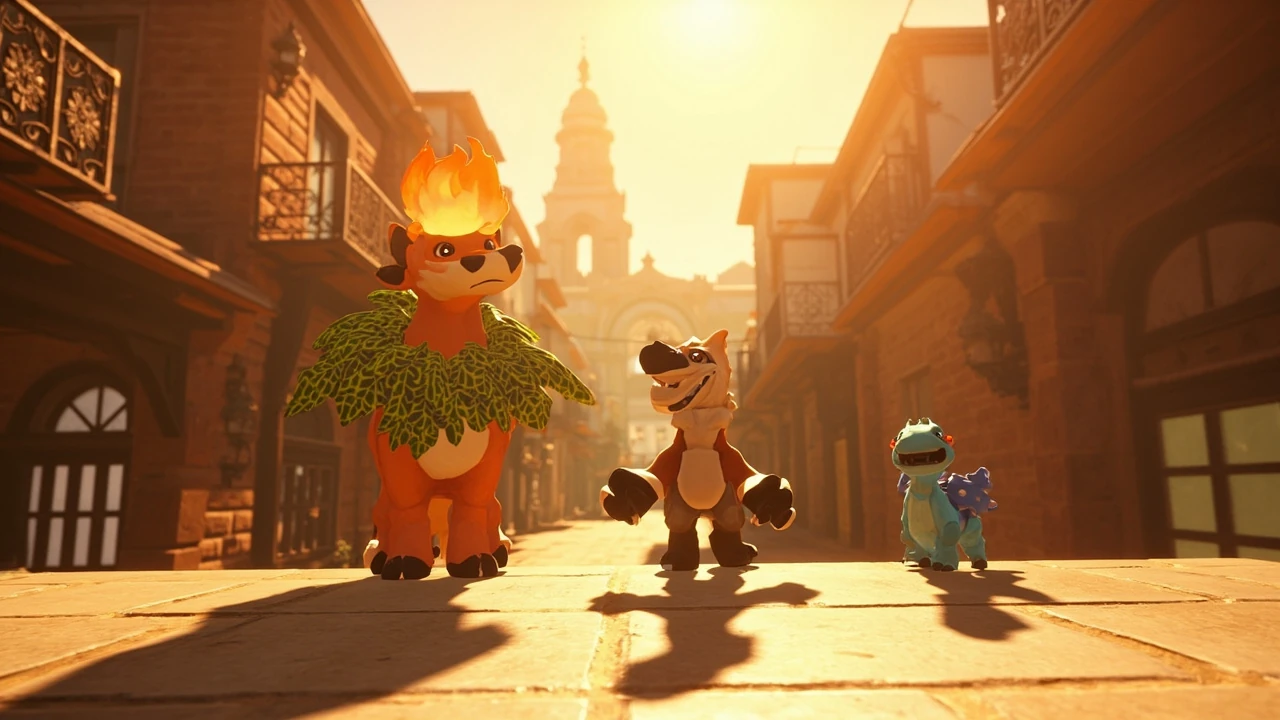
As of the public information released through official channels, the three pokemon za starters are Chikorita, Tepig, and Totodile. The trio draws from earlier generations rather than introducing brand-new creatures, which is a deliberate choice for a game that explores Kalos through a historical lens. The selection mixes a Grass-type, a Fire-type, and a Water-type so that the standard triangle is preserved, while each individual creature carries a different evolutionary line and a different stat profile. None of the three is region-specific to Kalos in the original games, which means the developer’s choice is more about nostalgia, familiarity, and a clean early-game difficulty curve than about showing off a new regional variant.
The reason this matters for a player planning ahead is that these three starters behave exactly as they do in their original generations. A returning player can rely on muscle memory, while a new player gets a relatively forgiving opening because each creature has a clearly defined role. Chikorita leans toward support and bulk, Tepig pushes raw offense with a late evolution that adds Fighting, and Totodile becomes a fast physical Water-type that scales well into the mid-game. The official material has not hinted at a fourth secret starter, a rental system, or a starter-specific gimmick that changes the usual one-of-three choice, so the planning problem remains the same as in previous mainline entries.
One detail worth flagging is that all three lines were available in earlier releases that returned to older regions, and the developers have used that pattern before to anchor a remake or a spinoff to a familiar emotional touchstone. A historical Lumiose setting gives them a reason to pull from earlier creature pools without breaking continuity, because the historical period of the region predates the discovery of several later-generation species. Players who are expecting a generation-9 starter because of the most recent mainline entry may need to recalibrate, and the rest of this article assumes the confirmed trio rather than a regional variant or a new creature.
Leaks, rumors, and the state of datamined evidence
Several community leaks have circulated since the game’s existence was made public, and it is worth ranking them by how much weight they deserve. The single most discussed leak claimed a new Grass- and Fire-type would replace two of the established starters, but that leak was traced to placeholder data and was not consistent with any later official trailer. A second wave of leaks, drawn from publicly visible certification filings and from footage captured during hands-on preview events, lined up with the official trio of Chikorita, Tepig, and Totodile. A third set of community rumors concerns a possible post-launch addition of a special starter through a downloadable event, but no publisher statement has confirmed that, and the developer’s track record suggests that any such event would be a separate piece of content rather than a hidden launch option.
Reading leaks carefully is part of being a serious player, and the same habit is useful for understanding how the game’s design reaches the public. Leaks that come from certification filings tend to be reliable because they reflect build data sent to platform holders, while leaks that come from speculative social media posts or unverified screenshots tend to drift. When a leak names three creatures and two of them are then shown in a later official trailer, the third one is usually accurate as well, which is why the consensus around Chikorita, Tepig, and Totodile has held even in the absence of a single official press release that lists all three by name. Readers who want to plan around the trio can do so without waiting for a final confirmation that may never come in a separate document.
It is also worth noting that the leak ecosystem around this title has been quieter than the leak ecosystem around some of its predecessors, partly because the developer has been more selective about preview access and partly because the Lumiose setting makes hands-on footage harder to capture without being noticed in a dense urban environment. Players who only follow the headline rumors will often miss the smaller details that actually matter for planning, such as which abilities the starters receive at each stage or whether the rival’s starter is locked or chosen by the player. Those details tend to surface in Japanese-language community posts and in retail database entries long before they reach English-language coverage, so a patient reader can usually get a clearer picture within a few weeks of any official reveal.
How the starter choice shapes your early game
Each of the pokemon za starters opens up a different kind of opening, and the choice should be made with the first few routes, the early gym leaders, and the rival battles in mind. The first few hours of the game lean heavily on the type triangle, so any of the three will work mechanically, but each one tilts the difficulty curve in a different direction. A Grass-type like Chikorita covers the early Water-type gym and provides solid utility through status moves, while a Fire-type like Tepig hits the early Bug-, Grass-, and Ice-type opponents hard. A Water-type like Totodile sweeps through Rock- and Ground-type opponents and tends to overperform in the early-game experience curve because of its high attack stat.
The choice also influences how the rival battle feels. Rival characters in mainline games are usually tuned to have a type advantage over the player’s starter, which means the player has to think about switching and team composition from the very first encounter. Players who pick Chikorita often need a backup Flying-type or Fire-type to handle the rival’s early Bird or Hound, while players who pick Tepig lean on Rock- and Water-type counters. Totodile players typically want a Grass- or Electric-type in the wings because the rival’s starter line will eventually learn a strong Grass-type move. None of these are deal-breakers, but they are real trade-offs that can shave hours off a playthrough when they are planned for in advance.
A secondary effect of the choice is that it shapes which non-starter creatures the player tends to prioritize in the early routes. A Chikorita player often picks up a Pikachu or a Pidgey because those cover the rival’s typing and the early Electric- and Flying-type gym threats, while a Tepig player often prioritizes a Mudkip-line, a Turtwig-line, or a Geodude to handle the early Water- and Rock-type matchups. A Totodile player usually reaches for a Bulbasaur-line, a Chinchou, or a Mareep to round out the team’s resistances. The point is not that any of these pairings are mandatory, but that the starter biases the first ten hours of exploration in a way that compounds with every gym badge.
Stat profile and evolution overview for each starter
The three pokemon za starters evolve along paths that are well understood from earlier generations, and the table below summarizes the most important planning data. The numbers reflect established base statistics from the source games and the typical move pool at each stage. Players who want a deeper stat breakdown can consult community-maintained databases, but the table is enough for an opening decision.
| Starter | Type line | Stage 1 (base stat total) | Stage 2 (base stat total) | Stage 3 (base stat total) | Best stat focus | Early gym coverage |
|---|---|---|---|---|---|---|
| Chikorita | Grass | Chikorita (318) | Bayleef (405) | Meganium (525) | Defense and support | Strong against Water and Ground, weak to Fire and Flying |
| Tepig | Fire (later Fire/Fighting) | Tepig (308) | Pignite (418) | Emboar (528) | Attack and physical offense | Strong against Bug, Grass, and Ice, weak to Water, Ground, and Flying |
| Totodile | Water | Totodile (314) | Croconaw (405) | Feraligatr (530) | Attack and speed | Strong against Rock, Ground, and Fire, weak to Grass and Electric |
The table is a planning aid, not a tier list, and it should be read alongside the section on early-game matchups. Base stat totals change slightly between generations when the developers adjust the underlying formulas, so a player who is concerned about a specific stat should verify the exact numbers in the in-game summary screen on day one. The third-stage totals are the relevant numbers for most of the main story, while the second-stage totals are the numbers a player actually lives with for the first two or three gym badges, and that transition is where a slow-evolving starter can feel punishing if the player has not invested in a solid second team member.
Type matchups against the early Kalos gym leaders
The early gym leaders in a Kalos-focused game are designed around the same type triangle that the starters complete, and the player’s choice determines which gym feels free and which one demands a counter. The table below lists the most likely first three gym types in a Lumiose-led playthrough, along with the starter that handles each one cleanly. The exact order can vary by game, but the type identities of the leaders are stable enough across the franchise that the table holds up for planning purposes. For broader context on the franchise structure that this title sits within, the Pok mon Legends entry summarizes the historical pattern the developer is drawing on here.
| Early gym leader (expected type) | Hard counter | Resisted by | Notes for a Chikorita run | Notes for a Tepig run | Notes for a Totodile run |
|---|---|---|---|---|---|
| Bug-type | Fire, Flying, Rock | Grass, Fighting, Ground | Resisted; bring a Flying-type | Hard counter; sweep | Resisted; bring a Grass- or Electric-type |
| Rock-type | Water, Grass, Fighting, Ground, Steel | Normal, Flying, Poison, Bug, Fire | Hard counter; sweep | Resisted; bring a Water- or Fighting-type | Hard counter; sweep |
| Fighting-type | Flying, Psychic, Fairy | Bug, Rock, Dark | Bring a Flying- or Psychic-type | Resisted; bring a Flying- or Psychic-type | Bring a Flying- or Psychic-type |
A reader who only has time to memorize one fact should remember that Rock- and Ground-type gyms are the universal safe spots for Grass- and Water-type starters, while Bug- and Grass-type gyms are where Fire-type starters earn their keep. A well-built team of six can paper over any of these, but a player who is running a single starter through the first ten hours will feel the type advantage or lack of one immediately. The Fighting-type gym is the great equalizer, because none of the three starters hits it for super effective damage, which is why every team template below includes a Flying- or Psychic-type partner regardless of which starter is chosen.
Comparing the three starters in plain language
Chikorita is the slow and steady option. Its defensive stat and its access to moves like Reflect and Light Screen let it absorb early hits and support a frailer team, which is useful in long boss fights but punishing in short rival battles. Tepig is the power option. It starts slow and pays off hardest at the final evolution, when it gains the Fighting secondary type and a physical move pool that can clear most neutral matchups. Totodile is the speed option. It outpaces the other two from the very first route, and its high attack means that even resisted hits land hard enough to keep the player in the fight.
A useful way to think about the choice is to ask which kind of opening the player enjoys most. A player who likes to set up, switch, and outlast opponents will enjoy Chikorita. A player who likes to brute-force gym leaders and accept a slow middle game will enjoy Tepig. A player who likes to lead with the strongest move every turn and chase fast clean knockouts will enjoy Totodile. None of these are wrong answers, and the underlying game is balanced so that any of the three can clear the main story with only a moderate amount of grinding.
There is also a personality dimension that the stats do not capture. Chikorita is the polite, easy-to-root-for choice that fits a slower, exploration-heavy playthrough in the Lumiose streets and gardens. Tepig is the scrappy underdog that becomes a powerhouse late, which fits a player who does not mind a quiet first act in exchange for a dominant third act. Totodile is the confident choice that immediately rewards aggression, which fits a player who plans to push straight through the early routes without much backtracking. The choice rarely comes down to power, because the developer balances the three against each other, and it more often comes down to which of those play patterns matches the way the reader already plays.
Building a balanced team around your starter
Players who want to soften the type weaknesses of their starter should plan a balanced team of six that covers the gaps in the early game. A reliable template is to keep the starter as the team’s lead and then add a flying type for speed control, a ground type for electric immunity, a fairy or steel type for dragon resistance, and a psychic or dark type for special attack coverage. The exact composition varies by playthrough, but the principle is the same: the starter should define the team’s identity, not carry it alone. The list below summarizes a team template that works well for any of the three starters, and it can be adjusted once the player knows which gym order the game uses.
- Starter: covers one leg of the type triangle and sets the team’s identity.
- Flying-type: handles Fighting-, Bug-, and Grass-type gyms that resist the starter.
- Ground-type: immune to Electric and hits Rock-, Steel-, and Fire-type threats.
- Fairy- or Steel-type: resists Dragon and provides defensive utility.
- Psychic- or Dark-type: covers special-attack roles that the physical starter cannot fill.
- Free slot: filled by a regional favorite, a story-gifted creature, or a traded evolution.
Players who do not want to think about team composition in advance can simply catch a wide variety of wild creatures and let the level curve sort itself out. The games have always been forgiving on Normal difficulty, and the open structure of Lumiose City gives the player many chances to swap team members without a major time cost. The template above is most useful for players who are running a Nuzlocke, a self-imposed limit, or a higher difficulty setting, where every team slot has to pull its weight from the second gym onward.
What the Lumiose City setting changes about the starter experience
Lumiose City is unusually large for a starting area, and the developer’s choice to set the opening act inside an urban hub changes how the player meets the pokemon za starters. Instead of a short tutorial route and a single lab, the player spends more time in the city, sees the rival more often, and has more chances to compare the starters before committing. That extra exposure rewards a player who thinks about the choice as a long-term decision, because the early hours of the game are no longer a sprint to the first gym. The lab where the starters are received is still a fixed point in the story, but the walk to it is longer, and the player often meets NPCs who recommend one creature or another based on their own experience.
The setting also matters for type matchups because Lumiose’s surrounding wild areas mix several biomes in a short walk. A player who picks Chikorita can step into a riverside route with Water- and Ground-type wild creatures, while a player who picks Tepig can head directly into a rocky area with Bug- and Grass-type wilds. These are soft differences, but they are real, and a player who has a preferred exploration style can let the surrounding environment nudge the choice. The trade-off is that Lumiose itself has fewer wild encounters than a forest or a meadow would, so the player who picks a Grass-type starter has to walk a little farther to find the Grass-type partners that complement the line.
One small but real consequence of the urban setting is that indoor trainers, cafe battles, and rooftop encounters become part of the early leveling curve. A player who treats those encounters as filler will fall behind the level of the first gym, while a player who treats them as a deliberate training loop will arrive at the first badge with a comfortable level buffer. The starter is the anchor for that training loop, because it is the one creature the player is guaranteed to have from the first scripted battle, and choosing a starter that the player actually enjoys using makes those cafe battles feel like progress instead of a chore.
Common questions about the starter choice
Some players ask whether the rival’s starter is fixed or randomized. The rival traditionally receives the starter that has a type advantage over the player’s choice, which is the same pattern used in earlier generations, and the developer’s promotional material has not suggested any change. Other players ask whether the starters can be obtained again after the initial choice, and the answer in most mainline games is yes, through post-game content, trading, or special distributions, but the player should not count on having a second chance during the main story. A third question is whether the three starters will appear as wild creatures later in the game, and the standard pattern is that they do not, which preserves the value of the early choice.
Players who care about competitive play will want to know whether the final evolutions of the three starters are viable in the ranked metagame. The honest answer is that they are usable but not dominant, because the metagame rewards creatures with stronger stat totals or more flexible move pools. A serious competitive player will eventually bench the starter line in favor of legendaries or specially bred creatures, but the starter remains a sentimental favorite and a useful role player throughout the post-game. A second honest answer is that the ranked metagame shifts with each ruleset update, and a starter that looks weak in one season can become a niche pick in the next, so it is worth checking the current banlist before writing any of the three off entirely.
How to make a final decision without restarting the game
The most important rule is to commit to the choice once it is made, because restarting a mainline game is a real time cost. A practical decision process is to write down the three starters on a piece of paper, list the early gym types next to each one, and circle the one that handles the largest number of early matchups in the player’s preferred style. Players who like to lead with their starter should pick the one with the highest base attack, while players who like to support the team should pick the one with the highest base defense. Players who do not want to think about stats at all can simply pick the one whose design they like the most, because the game is balanced enough that any of the three will carry the player to the credits.
For a player who is truly torn, the most defensible compromise is Totodile. Its high attack stat and clean type matchups make it the most forgiving of the three in the early game, and its final evolution has the highest base stat total of the three. That is not a universal recommendation, and the game is balanced so that any choice is defensible, but it is the option that requires the least planning. The pokemon za starters were chosen to give the player a clear opening, and the game does not punish any of the three choices in a way that cannot be solved with a few hours of extra play.
A final piece of advice is to avoid making the choice based on a tier list written before the game is actually in a player’s hands. Tier lists written from leaked data tend to overrate the early-evolution stats and underrate the late-evolution move pools, and tier lists written from post-game data tend to overrate the moves that only matter in the post-game. The honest answer is that the early-game balance is closer than any tier list suggests, and the most useful tier list is the one the player builds by playing the first five hours and paying attention to which gym actually feels free and which one feels like a wall.
Frequently asked questions
Which pokemon za starters are officially confirmed?
The officially confirmed trio is Chikorita, Tepig, and Totodile. The selection preserves the Grass-, Fire-, and Water-type triangle and draws from earlier generations rather than introducing new creatures. None of the three is native to Kalos, which is a deliberate design choice for a game set in a historical period of the region.
Are the pokemon za starters the same as in earlier games?
The base creatures and their evolutionary lines are the same as in their original games. Base statistics, type matchups, and most move pools are unchanged. The setting and story are new, but the creatures behave as a returning player would expect.
Can a player obtain more than one starter in a single playthrough?
During the main story, the player is limited to a single starter from the lab. Post-game content, trading with other players, or special distributions can add the other two to the team, but the player should not plan to catch them as wild creatures in the main story.
Which starter is best for a first-time player?
Totodile is the most forgiving of the three for a first-time player because of its high attack stat and clean type matchups against early Rock- and Ground-type opponents. Chikorita and Tepig are both viable but require more planning around their slower starts or their late evolution.
Do the pokemon za starters have hidden abilities or new moves?
Public information has not confirmed a unique hidden ability or a new signature move for the starters in this game. Players who want the latest information should check the official site and the in-game summary screen on launch day, where the developers typically list ability and move changes.
Will the starters be usable in competitive ranked play?
The final evolutions of the three starters are usable in ranked play but are not dominant in the metagame. They are best treated as role players or sentimental favorites rather than as the core of a serious ranked team. Players who want to climb the ladder will likely rotate in legendaries or specially bred creatures for the most demanding matchups.
Is there a secret fourth starter in pokemon za starters?
No public source has confirmed a secret fourth starter, and the developer’s promotional material has not hinted at one. A post-launch event could introduce a special creature, but the launch-day choice is between the three confirmed creatures.
Which starter handles the early Kalos gyms best?
Tepig handles Bug-, Grass-, and Ice-type gyms cleanly, Chikorita handles Water- and Ground-type gyms cleanly, and Totodile handles Rock- and Fire-type gyms cleanly. A balanced team covers the gaps, and any of the three can clear the early game with modest planning.
What level should the starter be at the first gym?
The starter should be within two levels of the gym leader’s strongest creature, which usually means between levels 12 and 16 by the time the player reaches the first badge. The exact level depends on how much optional content the player completes in Lumiose City.
Does the rival always pick the type-advantaged starter?
Yes, the rival receives the starter that has a type advantage over the player’s choice. This pattern has been stable across mainline games, and no public material for this title has changed it.
Leave a Reply